Costa's Hummingbird

Costa's Hummingbird
Showing posts with label Wild Turkey. Show all posts

Saturday, February 3, 2018

Continuing Education: Grasslands and Riparian

It did not take long for me to head back south to the grasslands of southeastern Arizona after my first trip with Barb and Jeanne.  Four days later, I was heading back again and this time I asked Kyle Waites if he would be interested in checking out some of these grasslands.  He readily accepted and off we went.  This time we headed straight to the grasslands and the longspur pond just east of the town of Sonoita, Arizona.  We arrived early, around sunrise, and it was overcast, cloudy and windy.  But we had prepared for that and we bundled up, got out our scopes and started scanning.  We actually arrived a bit too early as the only activity we had in the beginning was a few Horned Larks and Savannah Sparrows. It did not take long to hear the first of the longspurs flying in.  Once again, this was educational for me to experience their flight calls as they arrived and to also observe the flight patterns and compare those flight patterns to the Horned Lark flocks.  One can read about these details in books and hear it from other birders, but to actually experience it, it then gives a new meaning to continuing education. Hopefully, I will remember these points for the future.

On this visit I managed to capture a photo of the single Lapland Longspur that had eluded me on the first visit. Sad fact to this photo was that after finding the bird in my scope, and then trying to find it in my binoculars, when I raised my camera, I had no idea what I was seeing.  I just saw something moving in all the piles of cattle manure, I just started taking photos.  Surprised to get home and find I had the right bird.  We did manage to find and see all 3 species of longspurs;  Chestnut-collared, McCown's, and Lapland .

Lapland Longspur

Grsshopper Sparrow - Nice have this one pay a visit as well.

Pronghorn - I always love seeing these mammals.

From here we headed to the quaint and fun town of Patagonia to stop in for a visit to Paton's Hummingbird Haven which is now managed by the Tucson Audubon Society.  This place is well known to most birders in the United States as the best place to find the Violet-crowned Hummingbird.  And once again it lived up to its expectations as one came in to visit one of the feeders.  

 Violet-crowned Hummingbird


Keeping an eye to the sky!

Finding Cassin's Finches at this location was a bit unexpected and was a welcome bird to add to my Santa Cruz County list.  

 Cassin's Finch - Female


 Cassin's Finch - Male


 Lincoln's Sparrow

And of course Pyrrhuloxia is never a bad bird to see.

 Pyrrhuloxia - Male

Pyrrhuloxia - Female

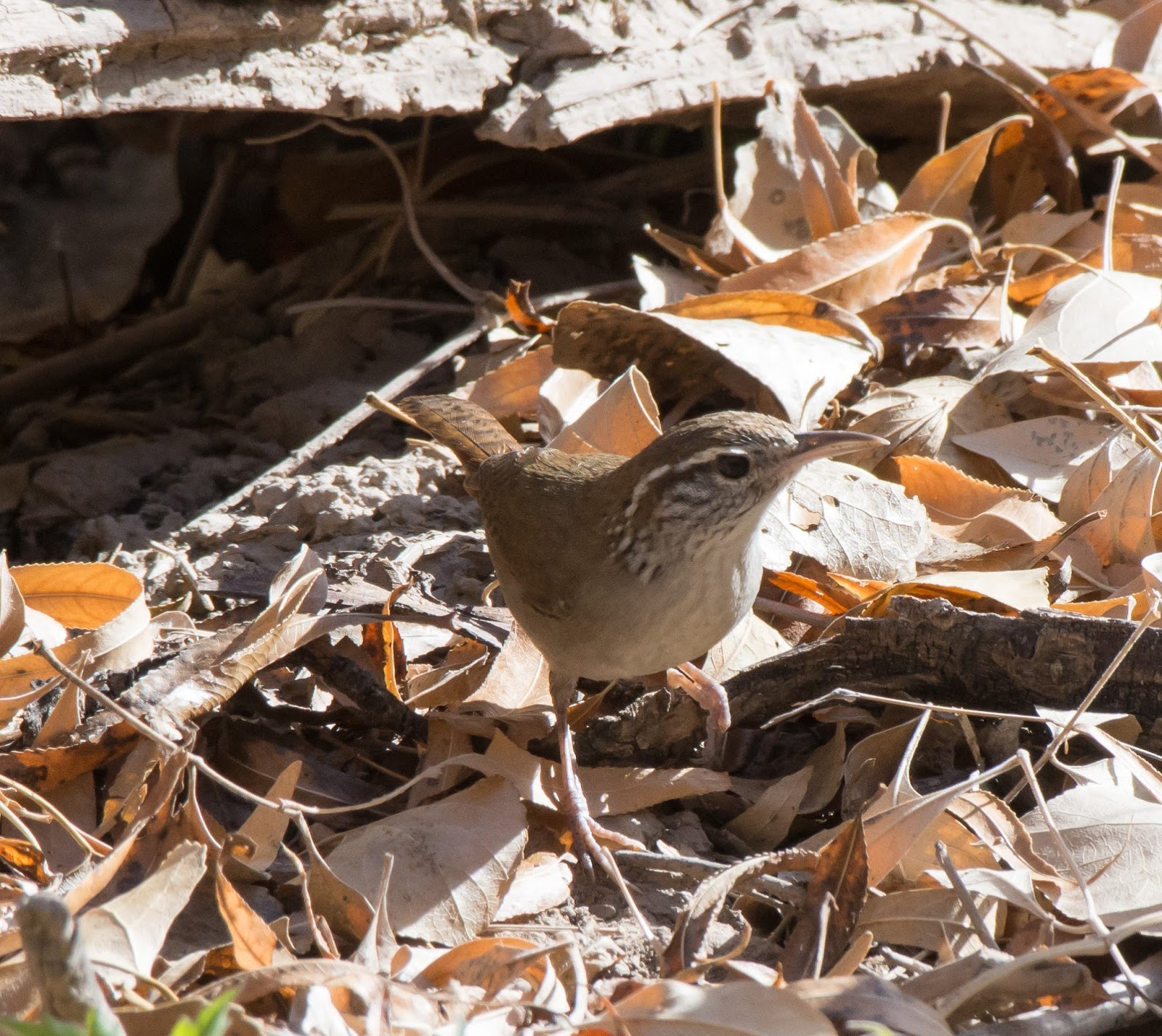
Since we were already that far south and needed to plan a route home, I suggested stopping at Santa Gertrudis Lane on the west side of the Santa Rita Mountains.  There had been reports of a Sinaloa Wren in the recent past, but it had proven to be a bit difficult to find and did not always cooperate with many birders.  Guess this day, it decided to cooperate with a few of us birders that were there. This is Mexican species that seems to be a bit more regular in the past few years in Arizona.  It has not been reported in any other state in the United States. 

Sinaloa Wren


Our final stop was at the Santa Rita Lodge in Madera Canyon, which is one of my favorite spots in the entire state of Arizona.  They have created a great setup for birders to watch and enjoy the birds.  And they have made it very friendly for the birds themselves.  

 Arizona Woodpecker


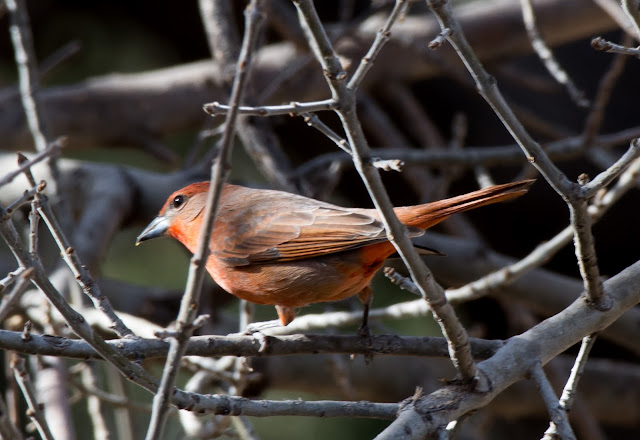
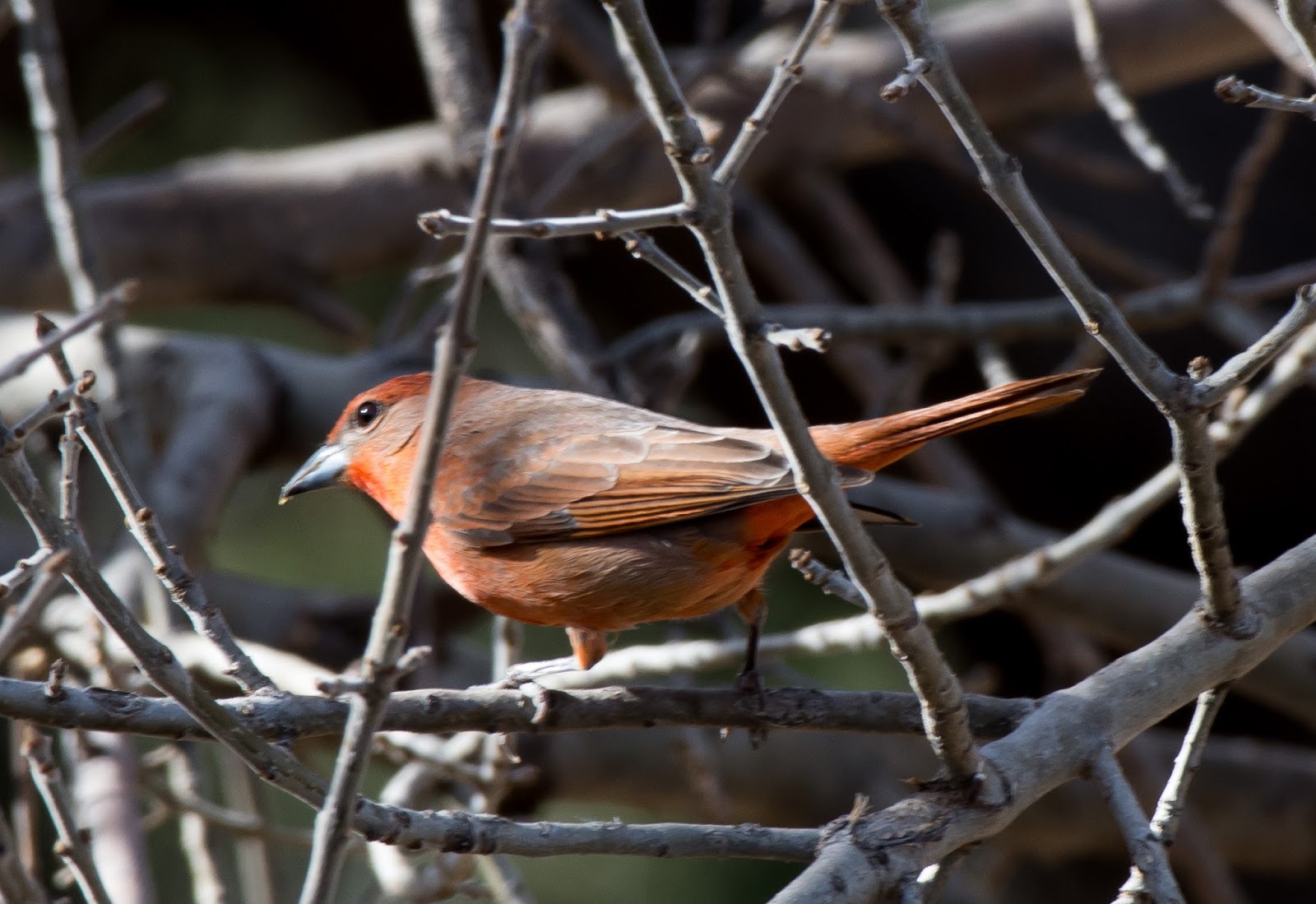
 Hepatic Tanager - Male


 Rivoli's Hummingbird


 Rufous-winged Sparrow


Wild Turkey - Male

We had an amazing day of birding and was able to see many of the southeastern Arizona specialties along with a lot of the really great regulars as well.  I believe Kyle ended up with 8 new life birds and he now knows where to find some great birds in some amazing spots in that part of the state. I am sure he will venture to the southeastern part of the state a bit more in the future.  It is amazing in the diversity of birds only a couple hours away from the Phoenix metro area.  We have our specialties as well, so many from the southeast also make the trek northward to see some of our great birds.    


Friday, June 24, 2016

Wisconsin - Part 3

When I first set out making blog posts on this trip to Wisconsin, I had no idea how many posts it was going to take, but I think I can safely say, there will be more than I anticipated.  This third day, Chris and I, headed north to the Green Bay area and the first stop was Bay Beach Wildlife Sanctuary.  This was a great place with a lot of birds.  The waterfowl area provided us with Trumpeter and Tundra Swans and my first ever American Black Duck. 

 American Black Duck


 Trumpeter Swan

Tundra Swan

Of course there were many other birds to be found at this location and some were birds that I had not seen for sometime and it was fun to observe and try to get some photos as well.  

 American Goldfinch

 Brown Thrasher - Doing what it does best; hiding from the camera!

 Purple Martin


Rose-breasted Grosbeak

 Wild Turkey

Wild Turkey with 3 chicks (one in the lower left corner in the grass, hard to see)

Next stop was the University of Wisconsin Green Bay Arboretum - Lambeau Cottage.  The place did not offer any new life birds for me but I finally was able to get a photos of a Great-crested Flycatcher.  My first sighting was not a great one and definitely no photos.  This bird is a member of the Myiarchus flycatcher family and is the eastern version of some of the Myiarchus flycatchers found in the western part of the United States  Some times they can be hard to identify, but their call notes are all very different, so learning those calls is vital to identification many times.  

 Great-crested Flycatcher


The Ruby-throated Hummingbird is probably the most recognized species of hummingbird in the United States, as it is the only species seen on a regular basis throughout the eastern part of the US.  In Arizona alone, we have 15 species of hummingbirds; some are easier to find than others, but most are reported at least once a year.  This was not a life bird as I had seen a female in Texas two years ago, so being able to finally see a male and get photos was a great success in my opinion.  This bird and the Yellow-bellied Sapsucker below were visitors to the back yard of Chris's grandmother.  

 Ruby-throated Hummingbird


Yellow-bellied Sapsucker


More to come on future posts.  Just too many birds to include all on just a couple of posts.  And there is going to be about a 3 day break from future posts due to an upcoming trip to a place with cooler temps!  


Tuesday, March 29, 2016

Santa Rita Mountains Visit

One thing that I really enjoy since I retired and think I have a bit more free time on my hands, is to assist out-of-state avian enthusiasts find some of the wonderful and special birds that Arizona has to offer.  Recently, I was put into contact with one of these birders, through a mutual friend, Jennifer Rycenga.

Michael Gertz and his family was moving from San Francisco to Ohio, and Mike was going to drive to Ohio via Arizona, while his family was flying to Ohio.  We made arrangements to meet in Madera Canyon as I thought that would be the easiest place to use as a base camp for the day and a half that I had to spare and the place he might see the biggest diversity of our avian wonders.  What I quickly discovered is that Mike is an excellent birder.  He has a very good ear and a very quick eye.  He does not miss much when it comes to birding and he has studied his birds well and needed very little assistance from someone like me.  It is always fun to watch birders new to Arizona react to some of these new birds they get to witness.

After spending some time at the feeders at Santa Rita Lodge, and racking up some birds for Mike, we headed to Florida Canyon.  This past winter, several reports with photographs indicated that a male Elegant Trogon had been seen fairly frequently near the parking area.  I knew there were possibilities for other birds in this location as well and even though it was already afternoon, we decided to check it out.  We did not find the Elegant Trogon when we arrived and when we returned from the hike, so that was a miss.  However, we did have some success on the trail.  At one point, we had stopped on the trail and while we were talking, we noticed something move in the dry grass about 3 feet in front of us.  Did not get a good look so was not sure what it might be, but just a few seconds after the first movement, a second and a third critter moved and that was when we caught a good glimpse of them:  3 Montezuma Quail, rustling away in the undercover of the dried grass!  This is not always an easy bird to detect, so every viewing of one is pretty exciting.  Obviously, we were not able to get photos, but the next bird along the trail was a different story.

We had detected a gnatcatcher, and knowing that this location is a good spot for Black-capped Gnatcatcher, I had a hunch this was our bird.  (Although, we did have a Blue-gray Gnatcatcher calling earlier on along the trail.)  Arizona is about the only reliable spot in the United States to see Black-capped Gnatcatcher, and we not only got to see it and photograph a nice male, we also got to witness it in the construction of a new nest.

Black-capped Gnatcatcher


Black-capped Gnatcatcher - Nest Construction

With daylight waning, we decided to call it a day, but as dusk arrived in Madera Canyon, the calls of the Whiskered Screech Owls kept us entertained.  We even hiked up one of the trails in the dark, but they did not cooperate with us by showing themselves.

The next morning, our target was the Madera Picnic area as regular reports were coming in daily of a pair of Hepatic Tanagers were visiting the spot.  It was just a short drive to the spot, but what greeted us on the road was really quite amazing.  A Hog-nosed Skunk had apparently laid claim to the road was was sauntering down the road and pretty much staying in the middle on the double yellow lines.

 Hog-nosed Skunk


(Follow the yellow brick road.)

Once we reached the picnic area, it was just a matter of waiting for the sun to rise up over the mountains in the east.  Once that happened, then the female Hepatic Tanager flew in and followed shortly thereafter by the male.

 Hepatic Tanager - Female


 Hepatic Tanager - Male


From here I had decided to go the Patagonia Lake State Park; another spot where the Elegant Trogon has been known to spend the winter.  This place was very birdy and we had a hard time keeping to our schedule to look for the trogon, as witnessed by these next 2 photos of a Vesper Sparrow and a Broad-billed Hummingbird that we found as we headed towards the trail.  

 Broad-billed Hummingbird


Vesper Sparrow

Along the trail as we headed down, we met a few birders that were headed back up and they had informed us that they had seen the trogon and they gave us an idea as to where they had seen it.  One of the birders mentioned that there were still more birders down there watching it so it would be easy to find.  We arrived in the general area that they had mentioned and all we found was an older couple sitting on a bench looking out at the lake, so I asked them if they had seen the trogon and they said yes, they had and that it took off into a ravine back behind them and were the last to see it.  So much for getting it easy and handed to us on a silver platter.  

So the two of us headed back into the drainage area where this couple advised it had flown.  We split up a bit and were checking out any and all trees.  A Northern Cardinal male had flown into an evergreen green and was incessantly calling and singing.   I tried to ignore it, but it finally got the best of me and I went to take a look at it.  Boy did that bright red bird stand out in the shade in that evergreen.  But wait, off to the left, I noticed another splotch of red in the tree and its sure was not another cardinal.  I quickly called out to Mike to let him know that I had found it and he did not waste any time in getting there.  It was rather deep in the trees, but we found an angle that provided us some good views and photos.  We did not want to approach it any closer and cause it to fly.  Not sure that it would have as it was busily preening itself and seemed unconcerned with us.  By that time we had attracted another birder that also came in to watch and get photos.  This bird is probably one of the most sought after birds in the United States and Arizona is one of the best places to find it.

Elegant Trogon


Success in finding such a special bird is always an exciting thing and I knew this just made my day.  Even I enjoy seeing this bird anytime I can.  We had one more stop to make and that was at Paton's in Patagonia where we were going to try locating a Violet-crowned Hummingbird.  This spot is probably the most reliable spot for this hummingbird from Mexico, that just barely makes its range into the United States.  When we arrived, the other birders that were there advised us that it had been coming in and had a favorite feeder so we tried keeping our eyes on that feeder while also watching all the other birds come and go.  It did not take long for Mike to spy its arrival on its preferred feeder.
  
Violet-crowned Hummingbird

We then returned to Madera Canyon and Santa Rita Lodge as we planned to both depart early the next morning.  I was heading home to Mesa and Mike was headed to some other spots in Arizona before heading out to Ohio.  In the short time that I spent with Mike, he had accumulated 16 new lifers, but he got many more on his own at other spots.  On our return to Madera Canyon, the Wild Turkeys were still present including one Tom that was putting on a display.  Later as dusk settled in, the Whiskered Screech Owls began calling again and on this second night Elf Owls started calling as they had returned as well.  Mike caught a brief look at one of the Elf Owls, so it was a fitting end to our adventure.

 Wild Turkey - Hen


Wild Turkey - Tom

Mike is an exceptional birder and with his new residence in Ohio, he is going to have a very interesting spring and summer with all the new eastern birds that he will be exposed to this year.  Who knows, maybe someday in the future our paths will cross and I will have an opportunity to go birding with him again.