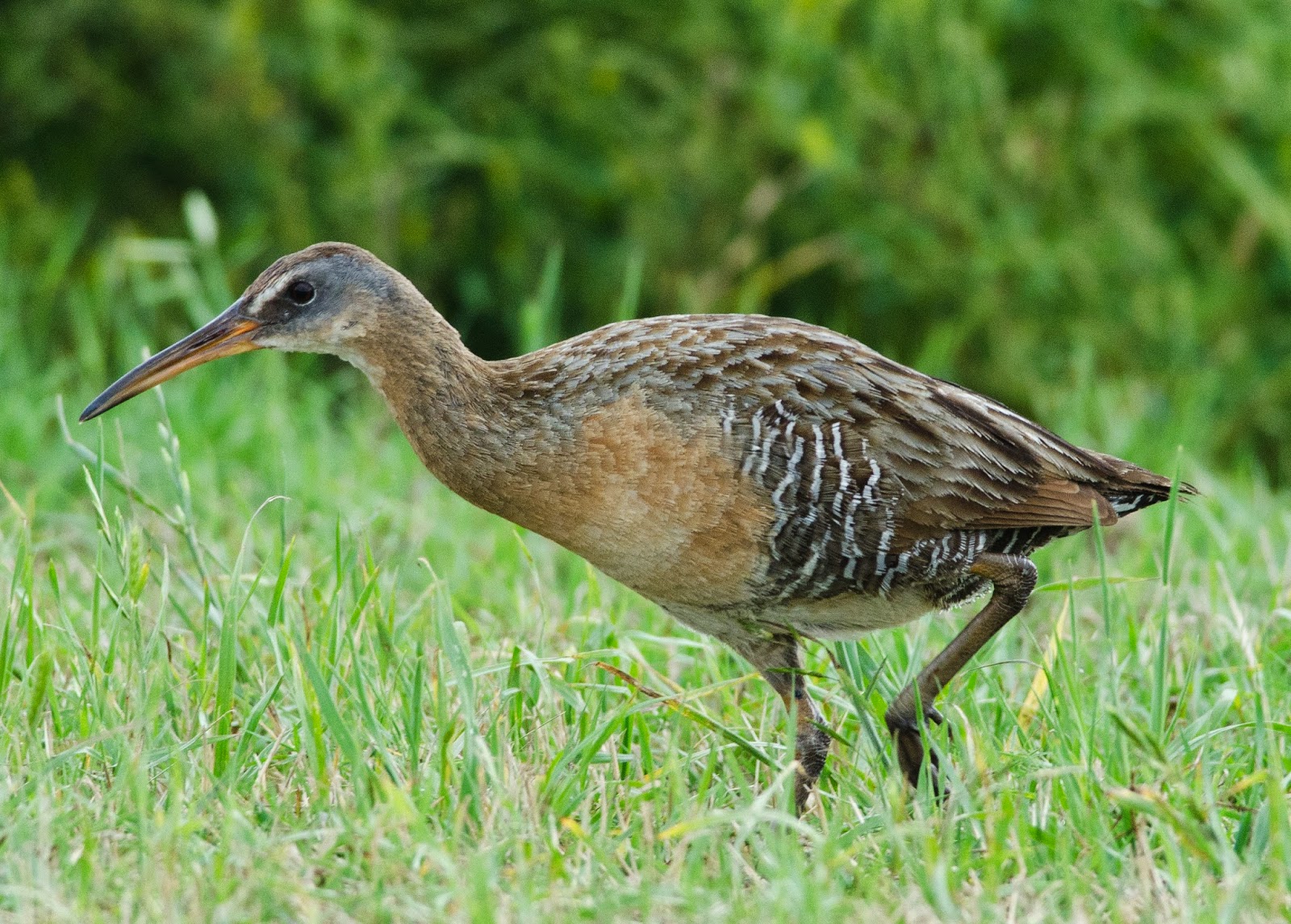
Costa's Hummingbird

Costa's Hummingbird
Showing posts with label Eastern Kingbird. Show all posts

Thursday, June 30, 2016

Wisconsin - Part 4

Must apologize to those that are following my journey in Wisconsin.  I had another commitment to show a friend from New York, the White Mountain area of Arizona and try to pursue some birds and I had to put the blogging on hold for about 3 days.  And another friend arrived into Mesa and we took in the Butterfly Wonderland in Scottsdale, so it has definitely put me behind in blogging.  

Next trip was to visit Horicon National Wildlife Refuge and on the way, we made a side trip to Killsnake State Wildlife Refuge and it did not take long to pickup my 10th new life bird on this Wisconsin adventure; the Bobolink.  This was my first viewing of this bird that has always intrigued me when studying field guides.  Reminds me of a blackbird in a tuxedo.  Before my trip came to an end, I got to see several of these birds.  

 Bobolink


As we started to exit this area, and as we were driving very slowly along the gravel road, we came upon a bird that has been a nemesis for me in Arizona; the Clay-colored Sparrow.  They occur regularly in Arizona in the winter months, although they are not common.  And they can be a bit difficult to identify from the many Brewer's Sparrows we see in winter in Arizona.  But looks are deceiving, because when they are singing, their songs are so different from each other.  In Arizona, they are very rarely singing.

 Clay-colored Sparrow


At Horicon, the Sandhill Cranes were scattered in many places and it was interesting to see them in breeding condition.  Spending 20 years in the Platte River Valley of Nebraska, I was used to seeing this bird yearly in spring migration in the hundreds of thousands.  I have also seen many in Arizona in the winter.  But these in Wisconsin were brown instead of gray!  Apparently this reddish-brown coloration is due to them preening with muddy bills and this coloration matches the color of many of the fields where they forage.  

 Sandhill Crane


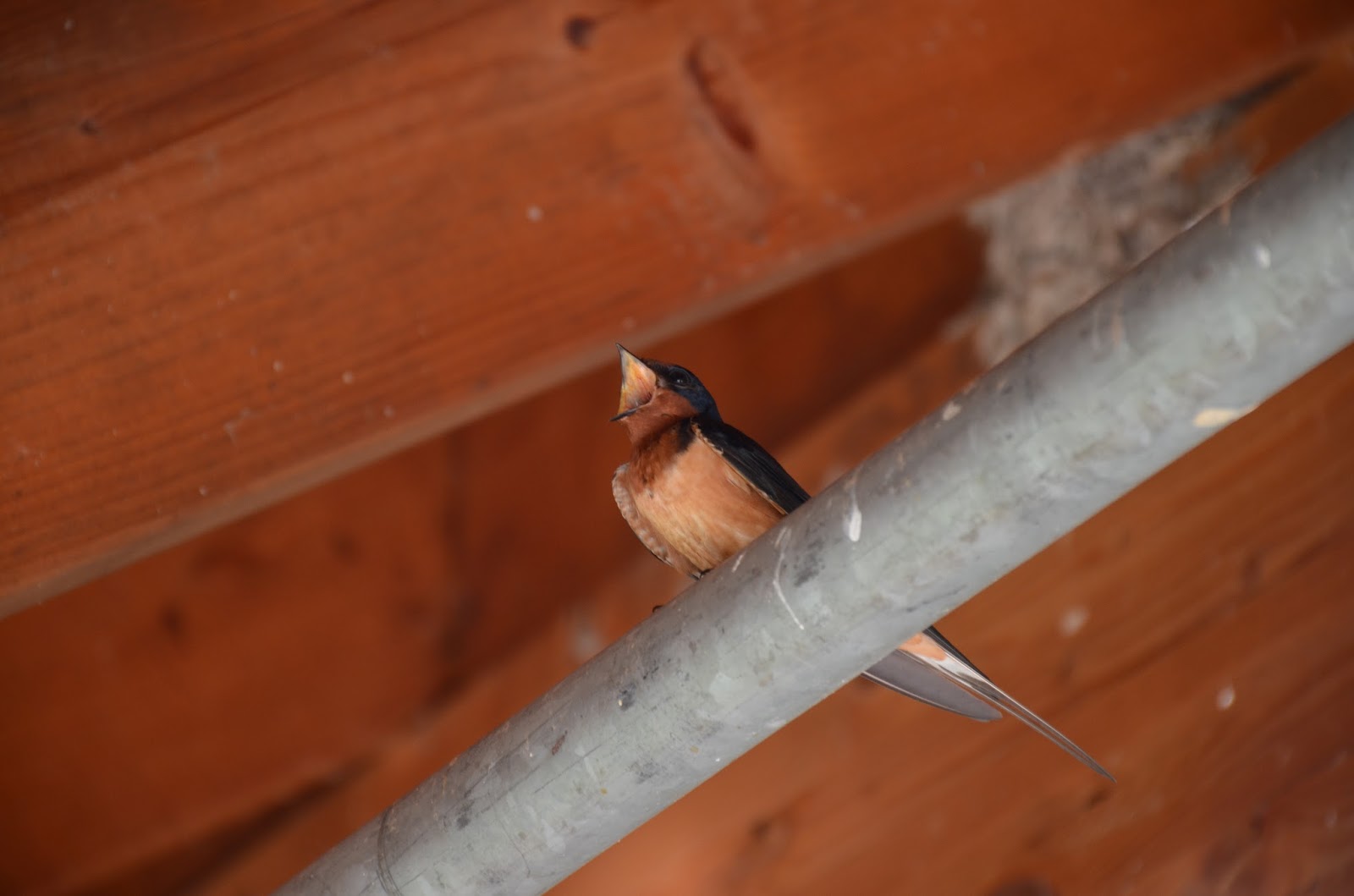
Other birds that we found at Horicon, include Black Terns, Eastern Kingbirds, Eastern Wood-Pewee, Barn Swallows, and a fledgling Red-winged Blackbird.
  
 Red-winged Blackbird - Fledgling

 Black Tern

 Eastern Kingbird

 Eastern Wood-Pewee
 Barn Swallow


For me, one of the coolest critters to find was a Snapping Turtle.  Not an animal that one wants to mess with because if they latch onto you, they have a lot of power in those jaws and they can break bones in fingers and they do not like to let go! 

 Snapping Turtle


Painted Turtle

Chris taking photos

We returned fairly early as we needed to prepare for the next part of our journey and it included some overnight stays in central and southwestern Wisconsin.  But on the way home, we made another stop of the Manitowoc Impoundment to see if anything new was being seen.  The American White Pelicans were in high numbers and had been absent for several years.  We also had high numbers of Caspian Terns and Bonaparte's Gulls.  

 American White Pelican


 Caspian Terns, Forster's Tern, and Bonaparte's Gulls

 Caspian Tern

Semipalmated Sandpiper

The next day we were to journey to the far corner of the state to pursue some warblers and some rarities in the central part of the state.


Wednesday, May 7, 2014

Texas: Anahuac National Wildlife Refuge

Day 3 and this time I had decided to visit Anahuac National Wildlife Refuge which is located a bit west of Highway 124 that connects Winnie and High Island.  Then also head south to the Bolivar Penisula and the Bolivar Flats Bird Sanctuary.  This is a huge area with a lot of marshy areas full of reeds, cattails and grasses but also with open areas of water.  One of the nicest assets to this area is the Shoveler Pond Loop; a paved one-way road that is about 2½ miles long around it and there are places to pull over to view and even a boardwalk or two going out into the marsh.  I fell in love with this place and was so glad I took the advice of another Texas birder, Sheridan Coffey, to pay a visit. I liked it so well that I came back the next day as well and found some more special birds and creatures.  But for day number 3, this is a brief synopsis of my findings and most of the photos were taken driving on the Shoveler Pond Loop.

One of my key life birds that I wanted to find on this trip was the Boat-tailed Grackle.  Now that I look back on this idea, I find it was a little absurd.  Not only did I find it, but I got to know it so well that I really became a bit annoyed with it; very common and very obnoxious! Very similar to the Great-tailed Grackles so common in Arizona in appearance and behavior.  Some other birds provided some decent photo opportunities along the way.

Boat-tailed Grackle

Eastern Kingbird

 Marsh Wren

Orchard Oriole

Blue Jay

While driving very slowly along the road, at one point I glanced in my rear view mirror and noticed a strange looking bird cross the road behind me.  I immediately stopped the car and headed back to where I last saw it disappear, which was a small area of grass and shrubs on the edge of the water.  Then it showed itself for a brief moment, (where I tried for photos and failed on the focus part) and when it called, I knew it was a King Rail.  This family of birds can be difficult to see as they tend to be very secretive so it was a great feeling to actually see one even if the photos left a lot to be desired.  This was a life bird I had not expected to see.

King Rail

Yellow-crowned Night Heron was another new addition to my list and I was able to see both adults and juveniles.

 Yellow-crowned Night Heron - adult

Yellow-crowned Night Heron- juvenile

Taking the road south from the visitor's center, I veered off from the paved road to take the road to the boating landing, and along the way, I discovered some more new found 'Common' birds; the Common Nighthawk which has been featured in just about every post from this trip, so here is one more.  This one appears to be sleeping on a post.

Common Nighhawk

Nearby were a pair of Forster's Terns taking a rest on posts.

Forster's Tern

Just as I reached the parking area of the boat dock I happened to see another strange looking bird walking in the grass.  This was my first view of a Clapper Rail and I was stunned to find one in full view and allowing me to take photos.  A bit like the King Rail, they are most generally a secretive and elusive bird.

 Clapper Rail

Clapper Rail

My last photo is one of a Laughing Gull.  This was the most frequently encountered gull during my visit to Texas and are actually probably one of the most smartly dressed gulls there are.

Laughing Gull

After having such a successful visit to Anahuac NWR, I now turned my attention to the Bolivar Penisula and the Bolivar Flats Bird Sanctuary.  This will be covered in the next blog post which will probably be delayed due to assisting in the North America Migratory Bird Count this coming weekend.  


Saturday, May 3, 2014

Texas: The Beginning

About a year ago, a great birding friend, Muriel Neddermeyer, returned from a birding trip to the coastal areas near Houston, Texas and brought back some incredible photos of some very different and unique birds.  I was so impressed that I decided to make the same trek myself this year.  The area is highlighted by High Island, the Bolivar Peninsula, and Anahuac National Wildlife Refuge. Timing is crucial for the most birds.  April and early May are the best times for migrating birds especially warblers.  Many of these migrants are flying straight from the Yucatan Peninsula in Mexico over the Gulf of Mexico and the first land fall is around High Island.  Of course birding is great there throughout the year, so any time is great.  

I arrived on Sunday shortly after noon and was greeted by humidity and very strong winds blowing out of the south.  These winds prevailed for all of Sunday and Monday which does affect the birding prospects a bit as a strong southerly wind helps to push those migrants further inland before making landfall.  So the weather plays a big part in a person's birding chances.  Sunday afternoon I spent driving some roads hoping to maybe find some Swallow-tailed Kites, but the wind made those chances pretty slim, but I did settle for a nice Red-shouldered Hawk on Highway 90.  This is a bird I have seen in Arizona, but it is not common there, so being able to get a fairly decent photo was a good start on a bad weather day.  Even the hawk was having trouble balancing itself against those strong southerly winds.

 Red-shouldered Hawk

Red-shouldered Hawk

I was staying in the town of Winnie, TX, so I checked in and then ventured out to drive some of the roads near there.  I came across a few parked cars of other birders that were scoping a flooded field and thankfully a couple of them were gracious enough to allow me to view through their scopes, where I picked up life birds #1, Buff-breasted Sandpiper and #2 American Golden-Plover.  Number one was too far out to get photos and number 2 was not much better, but at least good enough for ID purposes.

American Golden-Plover on the right; Semipalmated Plover on the left

After I left the group, I continued driving the roads and in doing so I found a couple of birds that I recollect from my youth on the farm in southwestern Nebraska; the Eastern Kingbird and the Scissor-tailed Flycatcher.  It was very exciting to see both again after such a long time.  The Scissor-tailed Flycatcher I had only seen once on the farm and it left a very vivid memory imprinted in my brain.  As it turned out I saw several of these magnificent birds during my stay in Texas.  

 Eastern Kingbird

Scissor-tailed Flycatcher

At other places along the road I discovered life birds 3, 4, and 5.  Number 3 was the Orchard Oriole and number 4 was the Boat-tailed Grackle.  Although I did not get photos at the time, before my trip was over I was able to photograph both of these birds in other locations.  Number 5 was the Common Nighhawk and this sighting really got me excited as it was a bird that I finally wanted to add to my list with full confidence that is was a Common Nighhawk and not a Lesser Nighhawk, which is very similar but also much more common in Arizona.  This bird was in-flight and calling its single note call that is unmistakable.  

Common Nighthawk

One last photo for this half day of birding was one of a Cattle Egret.  Another bird that is not new to me, but not overly common in Arizona, but this one is showing off some of its breeding plumage which makes it much more colorful.

Cattle Egret

So the beginning which really only consisted of about ½ day came to a close and knowing that the next day would be a full day of birding was very exciting.  Getting 5 life birds on the first ½ day was definitely a good start even if the weather did not cooperate so well.  Much more to come!