Last October, in conjunction with the AZFO (Arizona Field Ornithologists), annual meeting, Chris Rohrer and I joined forces to do a little birding in southwest Arizona and Sonora, Mexico. The meeting was held in Ajo, Arizona, which is just a short distance to the Mexico border and the city of Puerto Penasco is just a short 1 hour drive from the border. We also visited a small oasis in the desert in Organ Pipe Cactus National Monument called Quitobaquito Springs. Going to start off the blog post with the birds of Puerto Penasco. I always enjoy my trips to Puerto Penasco, (aka Rocky Point). With the close proximity to Arizona, it is the shortest distance for us to visit the ocean and the beaches. And of course shore birds and water birds are plentiful.
Terns filled the air as we walked the beaches of sand. These birds are birds of the sky that feed by diving into the surf to capture small fish. I recall my first visit to Rocky Point when I was naive to sea birds and the difficulty I had with identification. But over the years of seeing the different species, it does get easier. Still not an expert, as it is not a group of birds that are seen year-round in Arizona. We were joined by Keith Kamper for our birding portion in Rocky Point.
 Elegant Tern
 Forster's Tern
Probably one of the most iconic birds to be found in and around oceans, is the Magnificent Frigatebird. They are sometime called 'Pirates' of the Sea', due to their habit of trying to steal fish from other birds that are carrying food. They have been known to harass other birds enough to cause them to regurgitate what they have just eaten and the frigatebird is quick to catch the food before it hits the water.
 Magnificent Frigatebird
 Brown Pelican - A very common bird along the Pacific Coastal areas.
Gulls are plentiful as with most ocean areas, but the Yellow-footed Gull's range is pretty much confined to the Gulf of California, and is pretty much endemic to Mexico. However, a few do wander northward and can sometimes be found in and around the Salton Sea of California.
 Yellow-footed Gull
This next bird was the most unexpected find in the Rocky Point area. This is a Fox Sparrow and it was feeding in some trash overflow from a local dumpster. Somehow this bird forgot to stop off in Arizona for the winter and overshot its wintering target. Not a common bird to find in Sonora, Mexico. This is the 'Slate-colored' subspecies.
 Fox Sparrow
We had the pleasure to observe 4 species of plovers during our visit. It was great to be able to compare, Snowy, Semipalmated, and Wilson's Plovers all on the same beach and sand. (By the way, I am kind of partial to Snowy Plovers!)
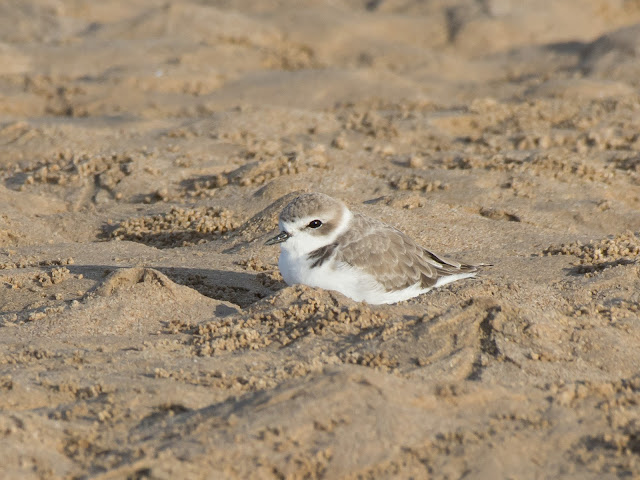 Snowy Plover
 Semipalmated Plover
 Wilson's Plover
 Black-bellied Plover
We also got to observe a couple long billed shorebirds; the Long-billed Curlew and the Whimbrel. These next 2 photos help to show the differences for identification purposes.


 Marbled Godwit - This bird has a much different bill than the previous 2 species.
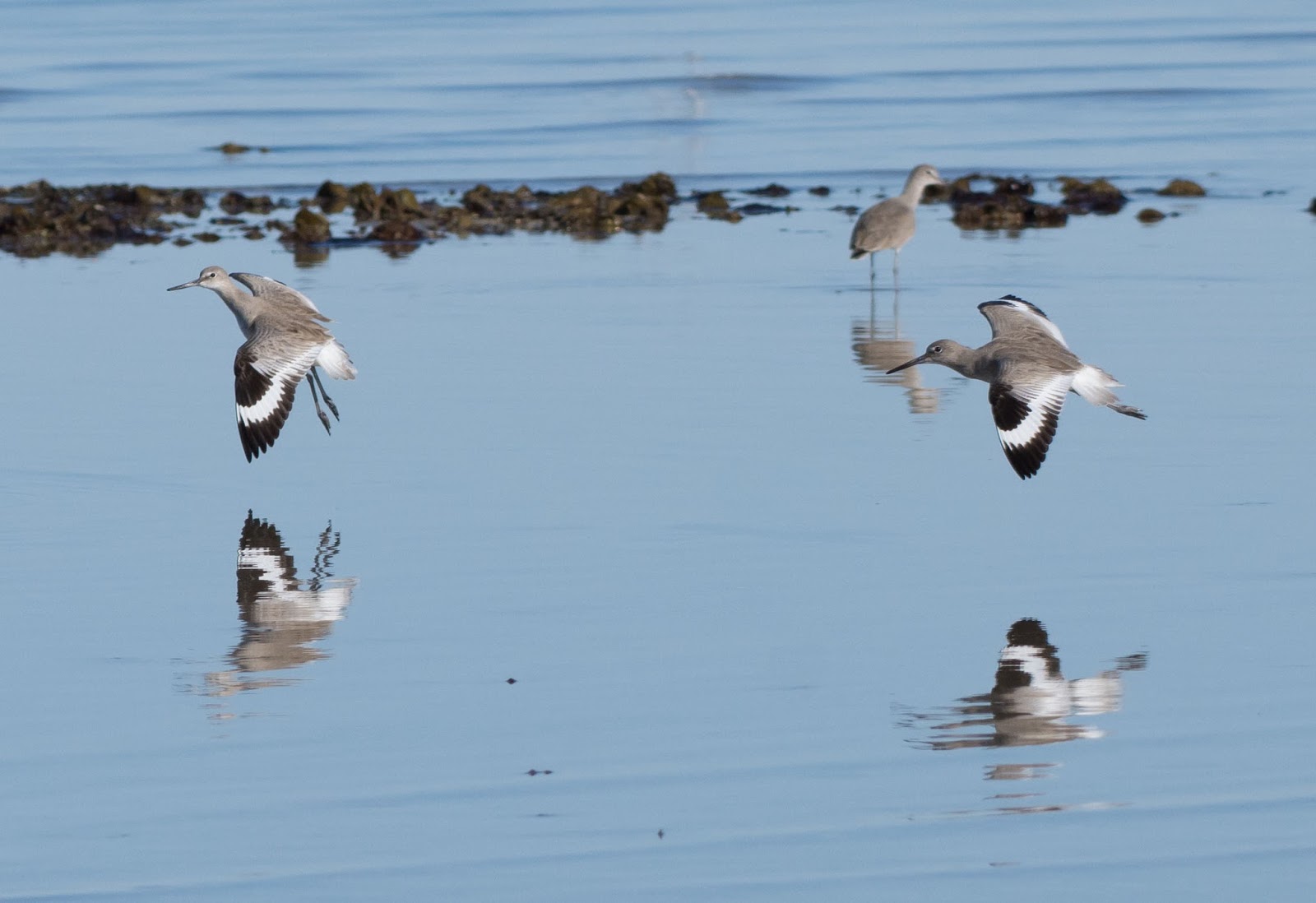
 Willet - Take note of the next photo that shows a much different look when this bird takes flight.
 Willet - In Flight - Hard to believe all that black and white is being hidden when this bird is standing still.
 Least Sandpiper - Probably the most common 'peep' or sandpiper around.
 Red Knot - Yep, it is hard to understand why this is a Red Knot, but this is their winter plumage. Breeding plumage is much different.
The other part of this blog post is focused on a well known spot in the Sonora Desert, but is just inside the border in the state of Arizona. It is so close to the border that one can see the vehicle traffic on the highway in Mexico that runs along the border. Total distance is probably about 25 yards. This is definitely a spot that would probably be destroyed if a border wall is built in this location. Quitobaquito Springs is an oasis in the Sonoran Desert. It is fresh water spring, that was well known to the Native Americans that resided in the desert southwest. At one time, settlers lived near the spring and dug trenches and created a pond to capture the flowing water and use it for irrigation for a few fruit trees. It is now part of the Organ Pipe Cactus National Monument and is being preserved. As it is the only source of water for miles around, obviously, it is a spot that many animals, birds, and insects will congregate.
Since the water is a draw to a lot of wildlife, there were many migrants that were visiting, including this Wilson's Snipe and Yellow-rumped Warbler.
Terns filled the air as we walked the beaches of sand. These birds are birds of the sky that feed by diving into the surf to capture small fish. I recall my first visit to Rocky Point when I was naive to sea birds and the difficulty I had with identification. But over the years of seeing the different species, it does get easier. Still not an expert, as it is not a group of birds that are seen year-round in Arizona. We were joined by Keith Kamper for our birding portion in Rocky Point.


Probably one of the most iconic birds to be found in and around oceans, is the Magnificent Frigatebird. They are sometime called 'Pirates' of the Sea', due to their habit of trying to steal fish from other birds that are carrying food. They have been known to harass other birds enough to cause them to regurgitate what they have just eaten and the frigatebird is quick to catch the food before it hits the water.


Gulls are plentiful as with most ocean areas, but the Yellow-footed Gull's range is pretty much confined to the Gulf of California, and is pretty much endemic to Mexico. However, a few do wander northward and can sometimes be found in and around the Salton Sea of California.

This next bird was the most unexpected find in the Rocky Point area. This is a Fox Sparrow and it was feeding in some trash overflow from a local dumpster. Somehow this bird forgot to stop off in Arizona for the winter and overshot its wintering target. Not a common bird to find in Sonora, Mexico. This is the 'Slate-colored' subspecies.

We had the pleasure to observe 4 species of plovers during our visit. It was great to be able to compare, Snowy, Semipalmated, and Wilson's Plovers all on the same beach and sand. (By the way, I am kind of partial to Snowy Plovers!)


We also got to observe a couple long billed shorebirds; the Long-billed Curlew and the Whimbrel. These next 2 photos help to show the differences for identification purposes.

Long-billed Curlew

Whimbrel


The other part of this blog post is focused on a well known spot in the Sonora Desert, but is just inside the border in the state of Arizona. It is so close to the border that one can see the vehicle traffic on the highway in Mexico that runs along the border. Total distance is probably about 25 yards. This is definitely a spot that would probably be destroyed if a border wall is built in this location. Quitobaquito Springs is an oasis in the Sonoran Desert. It is fresh water spring, that was well known to the Native Americans that resided in the desert southwest. At one time, settlers lived near the spring and dug trenches and created a pond to capture the flowing water and use it for irrigation for a few fruit trees. It is now part of the Organ Pipe Cactus National Monument and is being preserved. As it is the only source of water for miles around, obviously, it is a spot that many animals, birds, and insects will congregate.
Since the water is a draw to a lot of wildlife, there were many migrants that were visiting, including this Wilson's Snipe and Yellow-rumped Warbler.

Wilson's Snipe - Keeping an eye to the sky for predators.

Yellow-rumped Warbler - Feasting on a tasty snack that it found.
One of the big highlights at Quitobaquito Springs was a coupe of Odonata experts just happened to visit this spot earlier in the day and discovered a damselfly that is pretty rare for the United States. If I remember correctly, this was only the 3rd record for this ode in the US. So of course, we were lucky enough to see it as well. Enjoy the Baja Bluet.
 Baja Bluet
 Amethyst Dancer


 Quitobaquito Pupfish

 Empress Leilia
 Variegated Meadowhawk

One of the big highlights at Quitobaquito Springs was a coupe of Odonata experts just happened to visit this spot earlier in the day and discovered a damselfly that is pretty rare for the United States. If I remember correctly, this was only the 3rd record for this ode in the US. So of course, we were lucky enough to see it as well. Enjoy the Baja Bluet.


Desert Firetail

Exuviae of a dragonfly - In other works, this is this exoskeleton that remains of a dragonfly nymph after it molts.
In addition to the birds and odes, this location is the home to the Quitobaquito Pupfish, an endangered small fish that is endemic to this location. There are a couple other selected locations for this fish now with breeding taking place to ensure the fish does not become extinct in the case a disaster might take place at this location.


Quitobaquito pupfish
Finishing up this blog post with photos of a couple more arthropods, just because I liked the photos.


White-lined Bird Grasshopper - This was a new insect for me and is pretty handsome for a grasshopper!
The AZFO meeting had some very informative presentations that adds to a person's knowledge of our avian world. All in all, this was a wonderful 3 day adventure.