Costa's Hummingbird

Costa's Hummingbird
Showing posts with label Eastern Wood Pewee. Show all posts

Thursday, June 30, 2016

Wisconsin - Part 4

Must apologize to those that are following my journey in Wisconsin.  I had another commitment to show a friend from New York, the White Mountain area of Arizona and try to pursue some birds and I had to put the blogging on hold for about 3 days.  And another friend arrived into Mesa and we took in the Butterfly Wonderland in Scottsdale, so it has definitely put me behind in blogging.  

Next trip was to visit Horicon National Wildlife Refuge and on the way, we made a side trip to Killsnake State Wildlife Refuge and it did not take long to pickup my 10th new life bird on this Wisconsin adventure; the Bobolink.  This was my first viewing of this bird that has always intrigued me when studying field guides.  Reminds me of a blackbird in a tuxedo.  Before my trip came to an end, I got to see several of these birds.  

 Bobolink


As we started to exit this area, and as we were driving very slowly along the gravel road, we came upon a bird that has been a nemesis for me in Arizona; the Clay-colored Sparrow.  They occur regularly in Arizona in the winter months, although they are not common.  And they can be a bit difficult to identify from the many Brewer's Sparrows we see in winter in Arizona.  But looks are deceiving, because when they are singing, their songs are so different from each other.  In Arizona, they are very rarely singing.

 Clay-colored Sparrow


At Horicon, the Sandhill Cranes were scattered in many places and it was interesting to see them in breeding condition.  Spending 20 years in the Platte River Valley of Nebraska, I was used to seeing this bird yearly in spring migration in the hundreds of thousands.  I have also seen many in Arizona in the winter.  But these in Wisconsin were brown instead of gray!  Apparently this reddish-brown coloration is due to them preening with muddy bills and this coloration matches the color of many of the fields where they forage.  

 Sandhill Crane


Other birds that we found at Horicon, include Black Terns, Eastern Kingbirds, Eastern Wood-Pewee, Barn Swallows, and a fledgling Red-winged Blackbird.
  
 Red-winged Blackbird - Fledgling

 Black Tern

 Eastern Kingbird

 Eastern Wood-Pewee
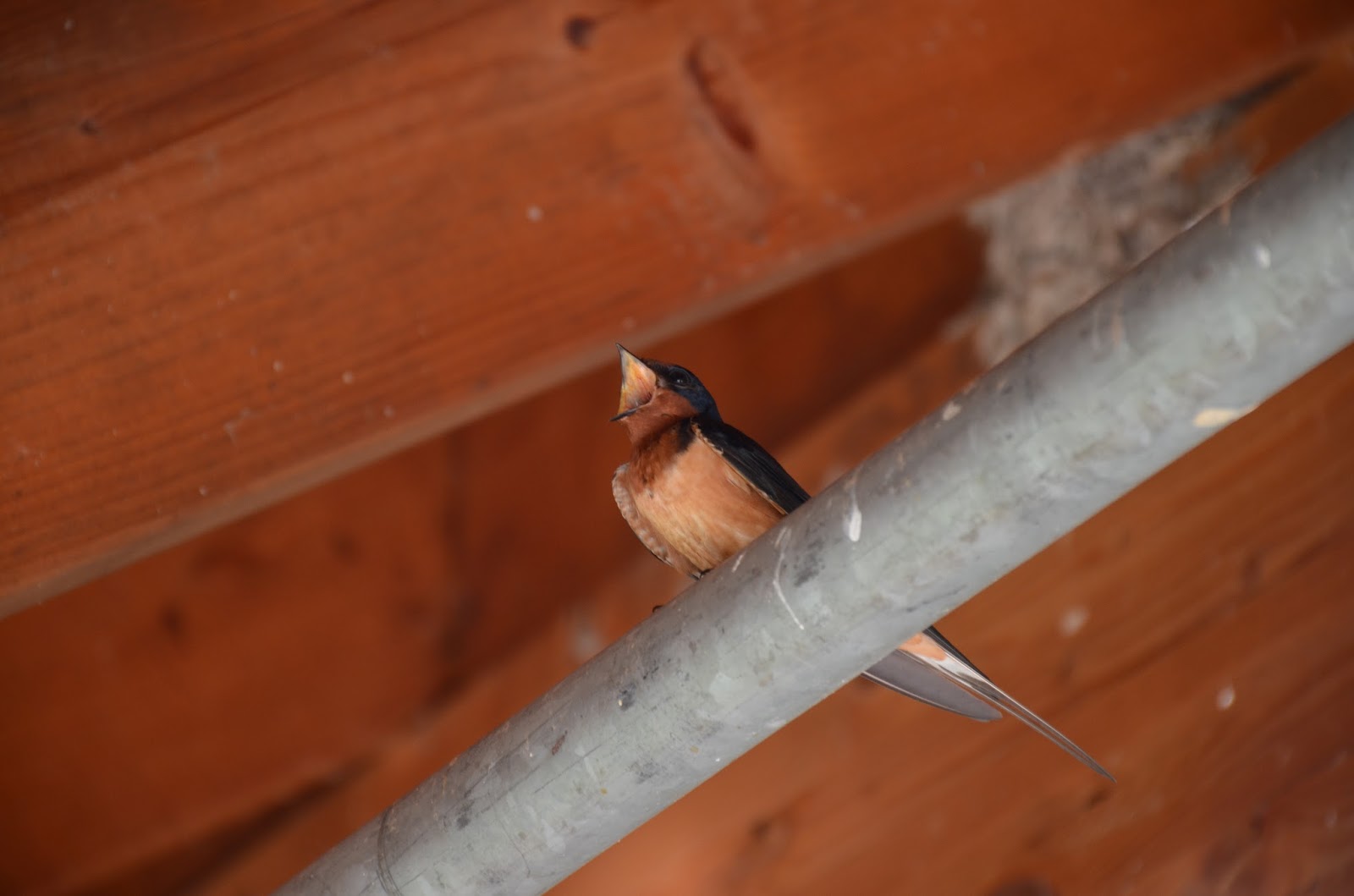
 Barn Swallow


For me, one of the coolest critters to find was a Snapping Turtle.  Not an animal that one wants to mess with because if they latch onto you, they have a lot of power in those jaws and they can break bones in fingers and they do not like to let go! 

 Snapping Turtle


Painted Turtle

Chris taking photos

We returned fairly early as we needed to prepare for the next part of our journey and it included some overnight stays in central and southwestern Wisconsin.  But on the way home, we made another stop of the Manitowoc Impoundment to see if anything new was being seen.  The American White Pelicans were in high numbers and had been absent for several years.  We also had high numbers of Caspian Terns and Bonaparte's Gulls.  

 American White Pelican


 Caspian Terns, Forster's Tern, and Bonaparte's Gulls

 Caspian Tern

Semipalmated Sandpiper

The next day we were to journey to the far corner of the state to pursue some warblers and some rarities in the central part of the state.


Monday, May 5, 2014

Texas: The Real & Serious Begininng

Day 2, and I was up early as today was the day I had planned to spend in High Island, a small town about 19 miles south of Winnie.  It is called High Island as it is where a salt dome is located and it sits about 30 feet higher than the surrounding flat grasslands and marshes.  Due to this slightly elevated height, it is covered with many very tall trees which is one of the first places that many of the migrating smaller birds such as warblers will immediately touch down after their long flight over the Gulf of Mexico.  They are many times exhausted and are in search of food and water.  The Houston Audubon Society monitors and maintains about 4 stands of trees in this small town and during peak migration they offer 3 daily birding trips lead by well qualified guides.  I wanted to take advantage of these 3 trips so I could become more familiar with the area and maybe find birds that I could easily overlook.  The weather for this day started out a little bit worse than Sunday; still a strong southerly wind, overcast and rain showers in the morning, it cleared up later in the day with some sunshine.

The first tour was centered around Boy Scout Woods in High Island and one of the birds that I discovered early on, was another Common Nighthawk.  After seeing the one in flight the day before, this day I was blessed to find one perched on a wire allowing lots of views and photos for anyone that was there.  As it turns out, I ended up finding 4 more of these birds sitting still; 3 on the ground and 1 on a fence post all in different locations during my stay.

Common Nighthawk

Starting with birding in the woods, I quickly discovered the the Gray Catbird was quite common and if you could locate the mulberry trees, then you would most likely find one of these birds feasting on those berries.

Gray Catbird

At one spot, I stumbled upon a Yellow-billed Cuckoo feasting on tent caterpillars.  This have always been a bit of a shy and elusive bird for me as they are quick to dart into thick vegetation when they know you are near.  This one was quite content and allowed me some great photos of this bird; even with a worm in its beak.

Yellow-billed Cuckoo

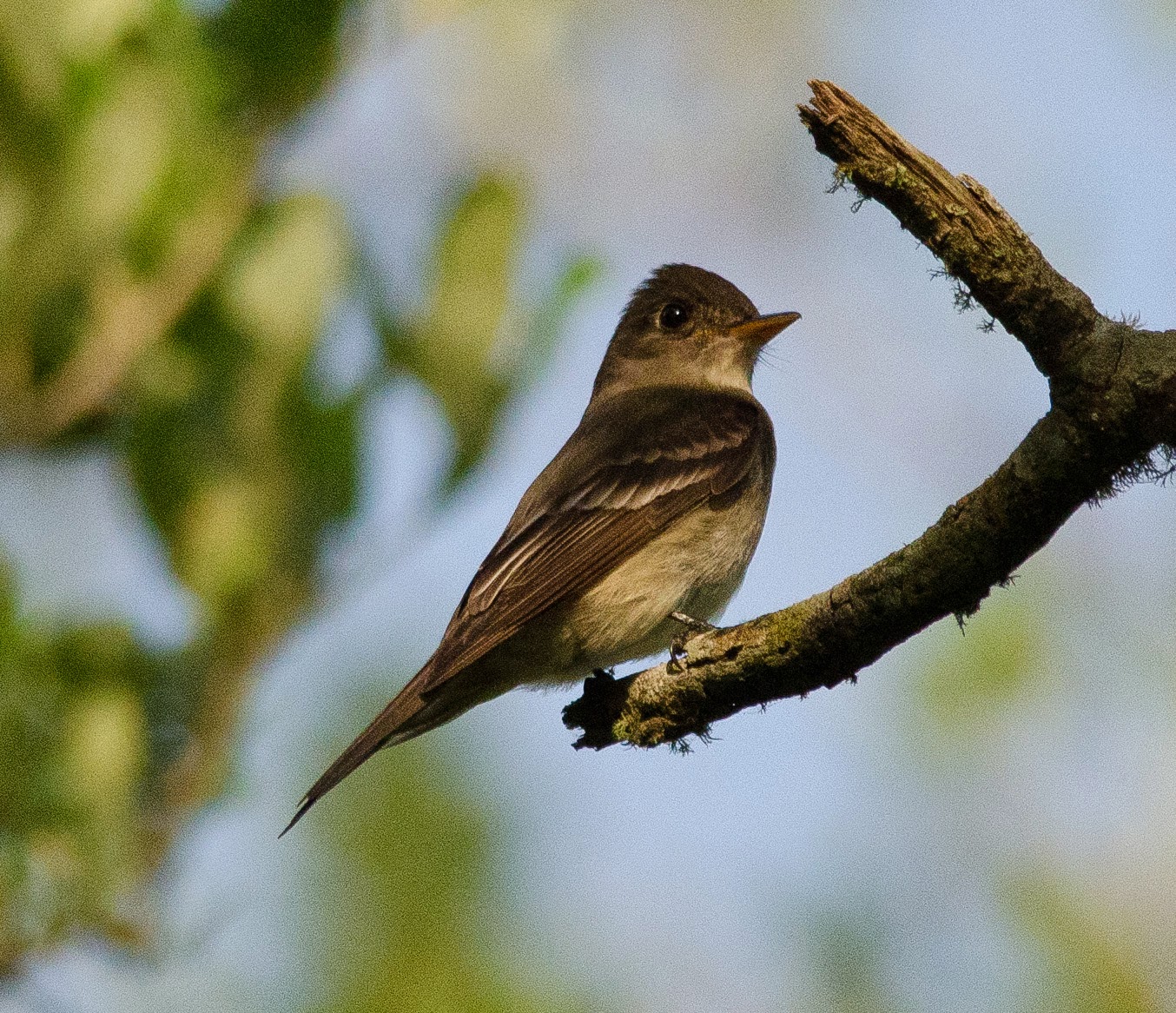
The rest of the birds that I had the pleasure of seeing were the smaller passerines or song birds.  Some were difficult to photograph as they were most often in the deep shade of the trees, or a bit too far for good focusing.  They include a male American Redstart, a Black-throated Green Warbler (new life bird), Common Yellowthroat, Eastern Wood Pewee (new life bird), Indigo Bunting female, Painted Bunting, Rose-breasted Grosbeak (new life bird), Scarlet Tanager (new life bird), and a Tennessee Warbler (another new life bird).

 American Redstart

 Black-throated Green Warbler

 Common Yellowthroat

Eastern Wood Pewee

 Indigo Bunting - Female

 Painted Bunting - Male

 Rose-breasted Grosbeak - Male

 Scarlet Tanager - Male

Tennessee Warbler

This day of birding has to be split up into 2 different posts due to the sheer numbers of birds.  The next part will focus on water birds as one of our trips involved a coastal trip and some great birds near water and also my visit to the Smith Oaks Rookery on High Island later in the afternoon.  I ended up with 14 new species of birds for this day, so it was really quite awesome!