
I have saved all the water-related birds for the last blog post. After all, my last lifer on this trip was a water bird, the Mew Gull. And we got it on the last day before our flights carried us back to the sunshine of Arizona. And, par for the course, Chris and I had to deal with the rain to find it. They are fairly common, but trying to locate one in the rain with binoculars getting wet, proved to be a challenge. So we just stood on the shoreline of the Columbia River at Broughton Beach and started taking photos of a lot of gulls that were traveling upstream in the rain.

Mew Gull
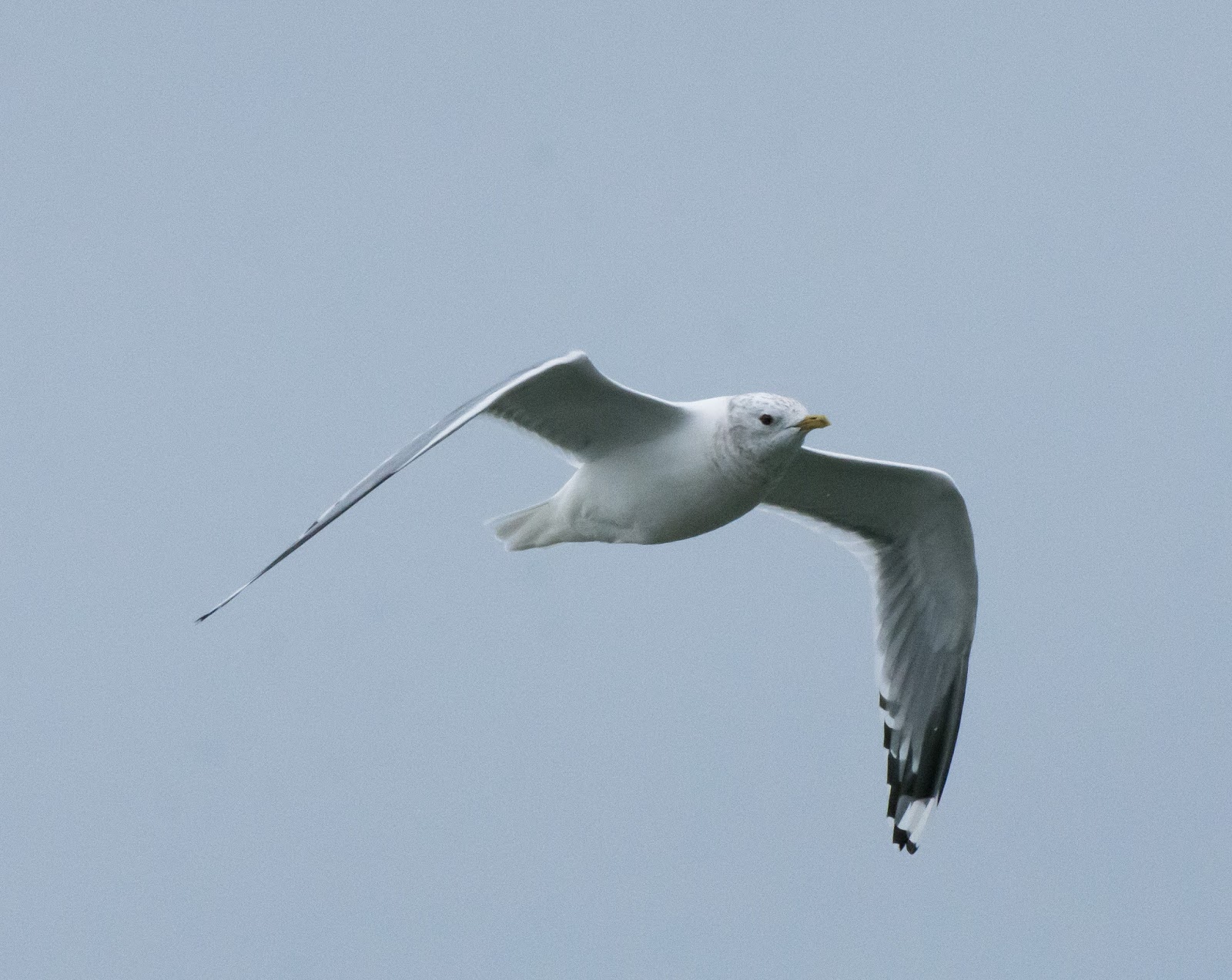

Gulls are not my forte in the birding world and not one that I would chase a lot. There are a couple of species that would definitely get my interest to chase, but doubt if either will show up in Arizona. We were challenged with the identification of the various gulls in Oregon. Gulls are notorious for hybridizing and we quickly found out that some of the hybrids in this area are quite common. So we had to approach the gull identification process with caution. We did have other gulls that were not hybrids and one of them was the Glaucous-winged Gull. This was not a lifer for me, but it was the first time I got to see one in adult plumage. My previous sighting was a juvenile in Arizona several years ago.

Glaucous-winged Gull
Below are a few photos of some of the other water birds we observed during our stay. Some I have seen in Arizona in the past, and some I have not. But always fun to see and observe some of these species that I do not see as often.

Horned Grebe

Common Murre

Common Murre

Surf Scoter - Male

White-winged Scoter

Black Oystercatcher

Black Turnstone

Belted Kingfisher

Belted Kingfisher

Golden-crowned Sparrow
Was also pleased to see a few other unusual flora and fauna. My first ever sighting of a Vole. I know they are a common rodent and are frequently seen as part of the diet of many raptors including owls.

My first ever photo of a Vole
Western Skunk Cabbage was a new and interesting plant that we found. Had heard of it before, but never knew much about it until now. It is sightings like this that are fascinating as I read up on things like this and understand more about our natural world.

Western Skunk Cabbage
These last 2 photos are of a spider species that was fairly common clambering around on the snow in the vicinity of where we had the gorgeous male Spruce Grouse. I have no idea what species it might be, but I had never seen a spider on snow before and seeing several of them leaves me in awe of what else is out there yet to be discovered.

Spider in the snow!

I returned to Arizona with 9 more new life birds so it was a great trip with some really awesome birds. If anyone is planning a trip to the Pacific Northwest and have some of these birds on your wish list, I highly recommend contacting Khanh Tran. He knows his birds well and not only knows where to find many of them, but also how to find them and what time of the year is best to observe them.


