Costa's Hummingbird

Costa's Hummingbird

Wednesday, March 6, 2013

Coon Bluff Recreation Area - 3 March 2013

Sunday was the last day of the weekend and so I tried to choose my destination carefully.  I had decided to hit some of the spots on the Salt River and I picked Coon Bluff as my first spot due to the fact that a Facebook friend (Kathy Gonzales) had gotten some wonderful photos of some Bald Eagles.  As it turned out I spent my entire morning there and never went to any of the other places as I was having such a good time.  I found 41 species of birds in that small area and some were very colorful, starting with the Vermilion Flycatchers, male and female.

 Vermilion Flycatcher-male

Vermilion Flycatcher-female

And while we are still looking at flycatchers, I also discovered an Ash-throated Flycatcher and a Gray Flycatcher, so it was a 3 flycatcher day for me.  (OK, the Gray Flycatcher did not want to cooperate for photos, but always a nice find even if they are not so colorful.)  Later this spring and summer, the Ash-throated Flycatchers will be abundant and raising young here in Arizona.

 Gray Flycatcher

Ash-throated Flycatcher

This place is probably the best place to find and observe the Phainopepla which belongs to the family of Silky Flycatchers and is the only member of this family that can be seen in the United States.  The males are jet black and the females are gray, both with white wing patches, seen when flying and both have red eyes.  They do catch a lot of insects in flight, but in the winter months they feed on the berries of the mistletoe.

 Phainopepla-female

Phainopepla-male

And we are not through with the colorful birds; how about some more red and maybe a yellow bird while we are at it.  Had a pair of Northern Cardinals in the area, but only the male was allowing photos on this day.  And the trees were full of Lesser Goldfinches, which are a bit more subdued than the American Goldfinch, but those males in breeding plumage are pretty darn sharp.  (The Lesser Goldfinch has recently been hanging around my backyard feeders.  Took them a while to find it, but now it is a constant source of food for them.)

 Northern Cardinal

Lesser Goldfinch

Now we come to the reason why I chose this place first, the Bald Eagles.  They were not there early, but showed up about mid morning.  They flew in and landed on the rocks above the river.  One adult and 2 juveniles blessed us with their presence.  It takes 4 years for a Bald Eagle to obtain its famous white head and tail.  Juveniles are mostly brown with varying area2 of white.  Of the 2 juveniles, I think one of them is a 2nd year bird and the other a 3rd year bird.  So here are my photos of the Bald Eagles perched high up on the rocks overlooking the Salt River.

 Bald Eagle-juvenile, maybe a 2 year bird

 Bald Eagle-juvenile, maybe a 3 year bird

 Bald Eagle-adult

Bald Eagle-adult

As you can see, I was having a pretty good time at this recreation site and it was packed full of campers.  I think they all thought I was a bit nuts walking around with my binoculars and a camera, but I bet most of them never even saw the bright red Vermilion Flycatchers or Cardinal, or the bright yellow of the Lesser goldfinches.  A few did notice the Bald Eagles, but some of the smaller birds are packed with color and character, so they are missing a lot!


Monday, March 4, 2013

Sun City, Arizona - 2 March 2013

Yes, I have to admit that I am a 'lister', one who keeps a list of some kind or another of birds.  My list is more of a lifetime list, whereas others keep various types of bird lists.  Maybe when retirement comes, I can specialize a bit more on creating specialty lists, but for now, I enjoy adding new life birds to my list.  And when a rarity shows up in and around the Phoenix area, I will make an effort to add that species to my list.  Such is the case this past weekend with a Golden-crowned Sparrow being reported at a golf course in Sun City, AZ.  A lot of credit for finding that bird has to go to several people in reporting it and giving good directions to it.  First off, to Dominic Sherony for finding this bird and then to Tommy DeBardeleben, Melanie Herring, and Lindsey Story for reconfirming it and giving directions to it.  It had been reported as hanging around with a small flock of White-crowned Sparrows and when I arrived at the Desert Trails Golf Course, I could not find any sparrows of any kind anywhere.  So I spent an hour and a half walking around the ponds and parking lot enjoying all the other birds I was seeing.  I finally gave up and decided to leave thinking I had missed another one.  Once I got in my car, I decided to drive through the far west parking area and as I did, I thought I heard the single tseep note of a White-crowned Sparrow.  Parked my car to take a look around and over a small knoll on the edge of the golf course I found White-crowned Sparrows, and sure enough the Golden-crowned was with them.  Something spooked them and I did not get long looks at it but long enough to capture a couple of poor quality photos, but good enough for an ID.

 Golden-crowned Sparrow


Golden-crowned Sparrow

Remember I mentioned that I was there for about 90 minutes before I found the target bird?  Well that 90 minutes did not go to waste with my camera in hand.  Here are some more photos that I took while looking for sparrows.  

 Ruby-crowned Kinglet


Northern Rough-winged Swalloow

 Verdin


Northern Mockingbird

 Bufflehead- female


 Bufflehead-male


Cactus Wren

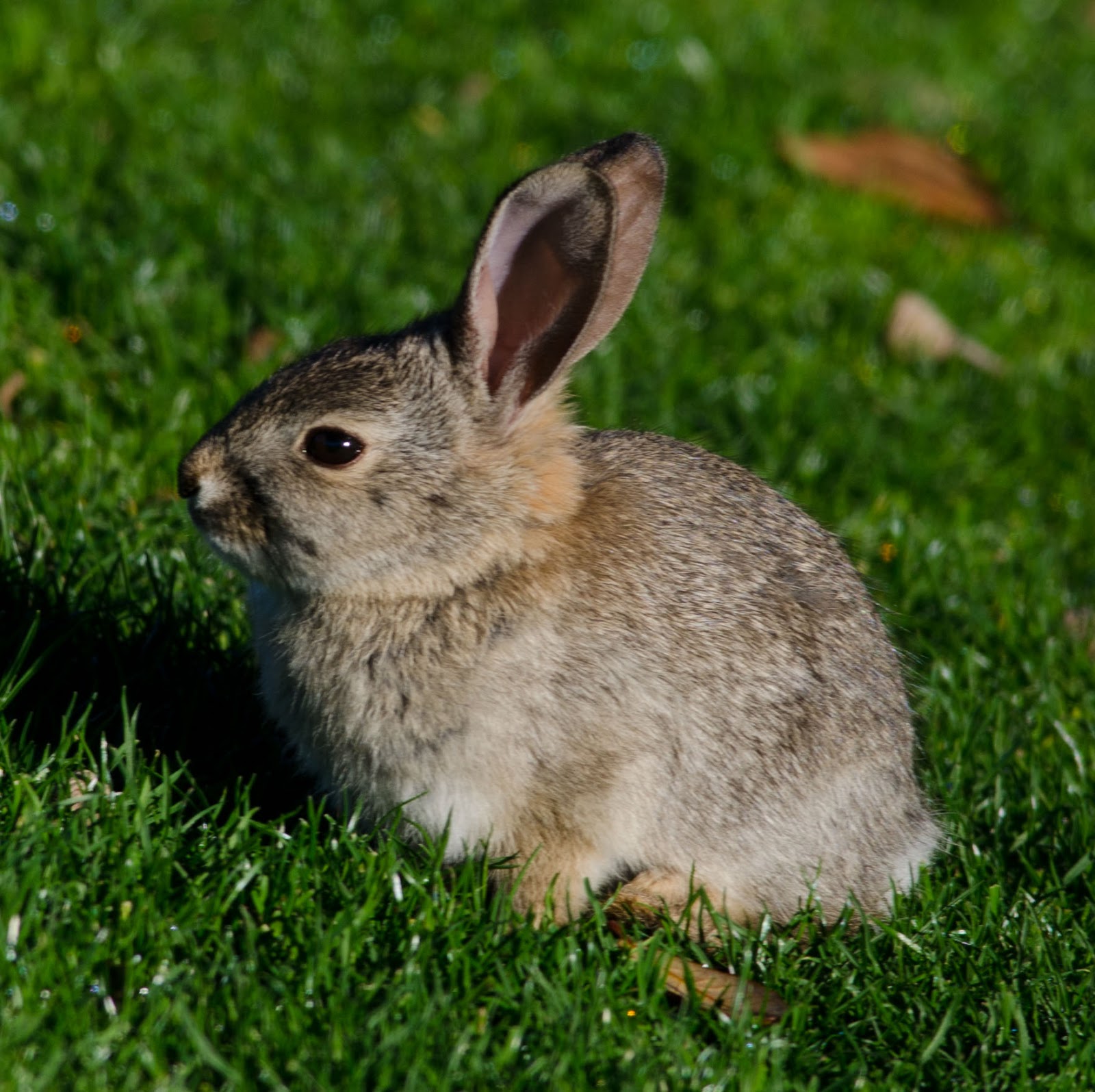
To finish off my photos I have to include a couple mammals; a baby Cottontail that was as cute as a button and a Coyote that looked a tad bit suspicious and stood perfectly still for my photo.  I think someone had it trained to not run from a camera!!!!!!!!!!!!!!!

 Cottontail


Coyote-decoy

I think the decoys are there to prevent too many geese from residing around the ponds.


Sunday, March 3, 2013

Pima Canyon Wash - 1 Mar 2013

Now that I have completed 3 days of birding, guess it is time to catch up on some blog posts.  Going to do these chronological to prevent myself from getting mixed up.  Friday after work, I headed to Pima Canyon Wash in South Mountain Park once again mostly for the exercise but also wondering what kind of avian life would present itself to me.  Now that I have an iPhone, I have downloaded a nifty little app, that has a GPS in it that records my distance, time and elevation of my walks.  And it keeps a longitude and latitude map of my complete trail.  What was interesting was the distance.  I have been guessing my distance on this hike at about 3 to 4 miles in length, but in reality it is right at 5 miles in length.  

First bird that greeted me as I got out of the car was the Arizona State Bird, a Cactus Wren.  No other wren  can be confused with this one.  It is the largest wren in the United States and has very distinct markings.  And they can be quite noisy at times with their various clucking and calls.

Cactus Wren

Soon after, as I was walking up the wash, I caught a glimpse of movement; something small in a bush very close to me.  I discovered a male Black-tailed Gnatcatcher and it was collecting nesting material.  He was not at all disturbed by my presence and continued picking shredded material off of the bush.  Most normally I hear these little birds before I see them, but in this case with a beak full of nesting material, I thinking singing was out of the question.  Love to see the black cap on these birds in their summer breeding plumage.  

 Black-tailed Gnatcatcher

Black-tailed Gnatcatcher

Further up the wash, I found a Rock Wren foraging among the rocks.  It had found a fairly large insect, but managed to hide the morsel before I could capture a photo.  

Rock Wren

And almost at my turn around point I discovered a couple of Canyon Towhees.  I had not seen this bird in this area for several weeks, so it was great to see them back and as usual, they were foraging on the ground and definitely acted a bit camera shy.  Had to shoot through the brush.

Canyon Towhee

After I had reach my turn around point and was able to briefly view a Canyon Wren, I headed back down the wash and came upon a Loggerhead Shrike that was being very cooperative with me and my camera.  It just perched out in full view with a nice blue sky background.

 Loggerhead Shrike

Loggerhead Shrike

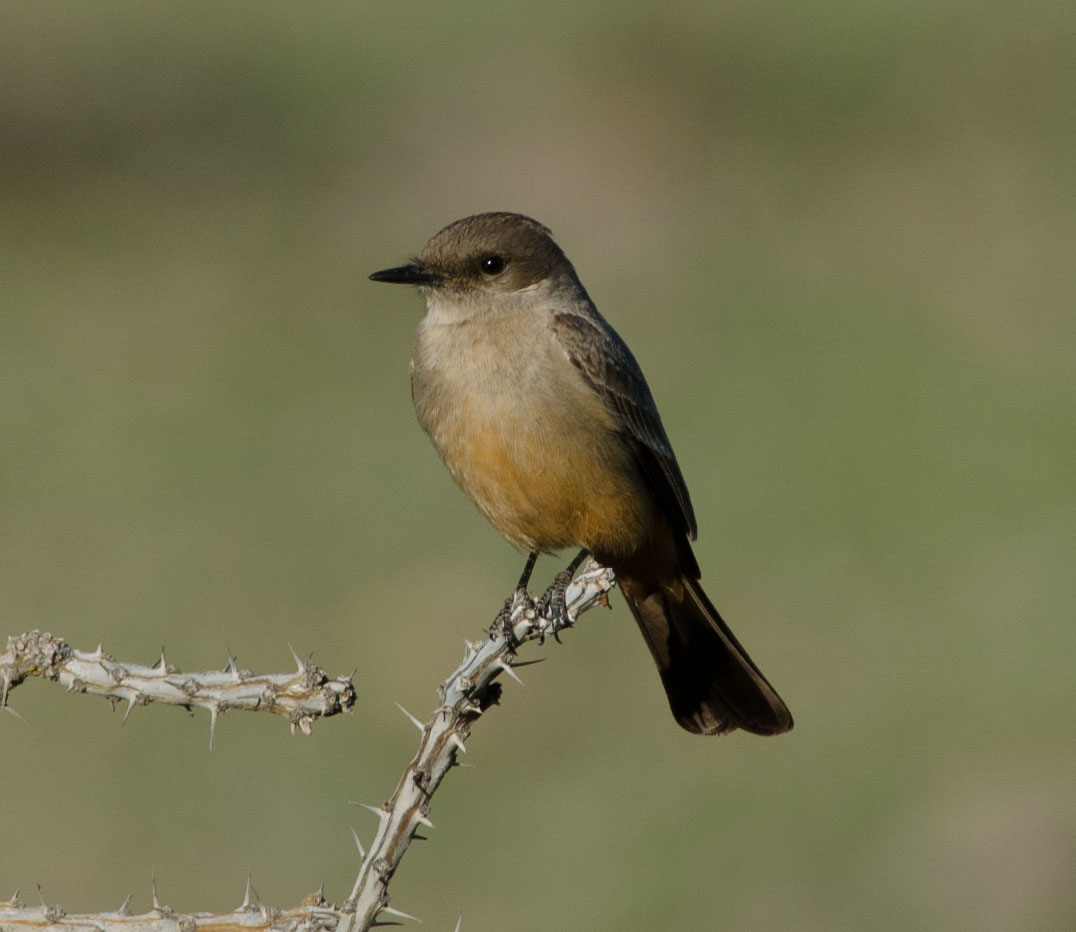
One of the last birds that I found when nearing the parking lot was a couple of Say's Phoebes.  A very common resident flycatcher in this part of Arizona.  While one of them was posing on an Ocotillo branch and I was firing away with the camera, this one must have had an itch on the back part of its neck.  Sure wish I could bend my leg back up over my back to scratch the itch!  And shortly thereafter, it took flight.

 Say's Phoebe

  Say's Phoebe

  Say's Phoebe

 Say's Phoebe

Yes, this is a lot of the same species I see quite frequently, but I never get tired of observing them.  It seems I am always learning a new behavior or trait about these frequently seen species.  The learning never ends.


Monday, February 25, 2013

Return from out West - 23 Feb 2013

After spending a lot of time way out west in the Buckeye/Arlington areas, I made a couple of stops on the way back to the east valley.  One of the stops was Encanto Park in Phoenix where a greater White-fronted Goose had been reported, (thank you Laurence!).  While it is not a rare bird, it is a bit uncommon; seems a few like to overwinter in some of the spots in Arizona.  What I was not prepared for was the popularity of Encanto Park.  This is a very popular park with a few rides and lots of picnic areas among the connected ponds, and on this day it was packed with people.  There was at least one wedding party and also a closed off area for a company picnic.  I wasn't expecting to see much, but then again, with the popularity of this park, there are plenty of people who feeds the ducks and pigeons and geese.  I think this Greater White-fronted Goose has found a place where it is not going to starve by any means and is probably going to stick around until it is time to head north to the Arctic Circle.  It appeared very content where is was.

 Greater White-fronted Goose

Greater White-fronted Goose

Since I found my target bird, I decided it was time to move on to another location, so I took a detour to visit the east end of Tempe Town Lake.  Almost always a great place to find Brown Pelicans in Arizona, and sure enough they were there, but a bit too far out of range for my lens.  Instead, I opted for photos of a Common Merganser and a Song Sparrow.  

 Song Sparrow

Common Merganser

It was a full day of birding with a lot of different habitats involved which led to a variety of different birds to be seen.  (For those that may have missed it, see my previous post and the thrasher quest.)

Sunday, February 24, 2013

A day west of Phoenix - 23 Feb 2013

Started out on Saturday way out west of Phoenix, even further west than Buckeye.  My first stop was a little known place to search for the elusive LeConte's Thrasher and found out that it is still elusive.  Have been to this spot a couple times before and have found it, but not this time, so I settled for some Sage Sparrows (which is always a nice find), some Lincoln's Sparrows and one of my favorite birds, a couple of Black-tailed Gnatcatchers.  

 Sage Sparrow

 Sage Sparrow

 Lincoln's Sparrow

 Black-tailed Gnatcatcher

  Black-tailed Gnatcatcher

 Black-tailed Gnatcatcher

Having failed to locate the thrasher, I then backtracked to the 'infamous' Buckeye Thrasher Spot only to find a lot of birders there with the same goal.  One group had traveled from Tucson and there was another group from Phoenix and there were a few others birding on their own.  One of them just happened to be fellow bird blogger extraordinaire Lawrence Butler.  Guess I should have came to this spot first as some others had sighted the Le Conte's Thrashers before I arrived.  I had to settle for Sage and Bendire's Thrashers, but even those are always nice to find.  On the road to the 'thrasher' spot, I did have to hit my brakes so I could capture of a photo of a nice Red-tailed Hawk regally perched on the top of a Saguaro Cactus on the side of the road.

Red-tailed Hawk

Although I did not get any photos at the thrasher spot, I also got the privilege of meeting a young and enthusiastic and very knowledgeable birder, Alex and his parents.  It is very refreshing to see young people show such an interest in ornithology and know the future generations will be here to carry on with the love of our avian world.  The 5 of us then joined forces and traveled up and down the roads in and around Arlington where Alex and family found their first ever Sandhill Cranes.  We all then parted our ways and I slowly drove the roads in the Buckeye/Arlington farm grounds where I snapped a couple of photos along the way.  Most notably, a couple of Loggerhead Shrikes and an American Kestrel.  I watched the Kestrel as it dove down from the electrical wire to the ground and when it flew back to a perch on the crossbar, I noticed one leg was hanging a bit low.  Guess the photo shows its small insect morsel that it had captured.

 Loggerhead Shrike

American Kestrel

And my final photo, to take us away from the avian theme, is one of a domesticated goat.  But looking at the photo, another critter is trying to get noticed on the left!


Might not have seen my target bird the Le Conte's Thrasher, but overall, it turned out to be a great day.  Had a couple more stops when I got back into Phoenix, but will do a separate blog post on those two stops.


Sunday, February 17, 2013

A couple of new rarities

Finally getting around to posting some photos of a couple rare birds and new life birds for me.  Both of these were seen and photographed a few weeks ago.  The first bird was discovered by a friend, Tom Lewis, during the Greater Phoenix Waterbird count that took place on January 19th.  And another friend, Muriel Neddermeyer, called me late on the same day that this bird was discovered in Maricopa County.  This bird is the Least Grebe whose range is usually far southern Texas, but there have been a few seen in extreme southern Arizona and breeding has been documented.  This sighting in Maricopa County was further north than they have been seen before, so it was an immediate hit with all the birders.  I was at the location early the next morning and there were already 5 other birders viewing it, and it became quite popular in the next week or two.  This completed my list of seeing all seven species of North American Grebes in Arizona (6 species in Maricopa County).  At just a little under 10", this is our smallest Grebe in the US.  

 Least Grebe

 Least Grebe

Least Grebe

The second bird for this post is one that I consider to be pretty awesome in the color department.  The Red-breasted Sapsucker is a bird from the Pacific northwest coast.  Their winter range extends to Southern California and every once in a while one ventures a bit further east an into Arizona.  This bird was reported in late December on the lower Salt River and has apparently found a tree to its liking as many birders have seen it and it seems to favor a certain tree.  It has tapped several holes in this tree from which the tree sap has been oozing and during one of my visits I also observed a Verdin and a Ruby-crowned Kinglet visiting these same holes to take advantage of the sap or possibly even feed on insects that might have been trapped in the sticky sap.  The photos will show the many holes.  This is one heck of a gorgeous bird and if the bright red isn't enough, then the black and white pattern on the back is just as stunning.

 Red-breasted Sapsucker

 Red-breasted Sapsucker

 Red-breasted Sapsucker

Red-breasted Sapsucker

Two totally different birds, and both were a joy to watch and observe.