Costa's Hummingbird

Costa's Hummingbird

Monday, March 11, 2013

Boyce Thompson Arboretum - 10 March 2013

OK, I finally got away from South Mountain Park and this time I ventured east to Boyce Thompson Arboretum, one of my favorite places.  And all I can say is WOW!  What a great day to go.  This place was a birders haven on this day as the AZFO was holding a meeting there and it attracted birders from all of the state and I got to meet a lot of people that I knew by name only.  And of course, the icing on the cake was a couple of special birds that have been seen at this location and past couple of weeks.  Both species happen to be Sapsuckers; one was a male Yellow-bellied Sapsucker and the other was a female Williamson's Sapsucker.  Just a couple of months ago, I saw my first Yellow-bellied Sapsucker and then saw a 2nd one on one of my CBC's.  I had never seen the Williamson's Sapsucker, so this one was a new life bird for me.  The Yellow-bellied is a very handsome bird and with the assistance of others, it was found and I lingered behind to try to get some photos and it finally obliged. The Williamson's female was much easier to find as she has a special territory that she seems to favor.  The male of this species is much different in appearance and someday I hope to see one of those handsome birds as well.

 Yellow-bellied Sapsucker-male

Williamson's Sapsucker-female

While the Sapsuckers were the main draw with many birders coming and going to get a look, the rest of this place did not disappoint!  Since we are on the subject of woodpeckers (Sapsuckers belong to the woodpecker family), I had a nice male Ladderback Woodpecker pose for me on top of a Prickly Pear Cactus.

Ladderback Woodpecker-male

 You really know springtime has arrived in Arizona with the birds putting on quite a display and even found a pair of Curve-billed Thrashers feeding young chicks already.  The thrashers nest was in the confines of a Cholla Cactus, which is one of their favorite nesting habitats.  Will definitely keep a lot of the predators out!  Also had a nice looking Verdin land on another cactus to pose for me with its nice yellow head and its dark red shoulder patch.  It is amazing that they can land on a thorn of a cactus and be delicately balanced and not be harmed by any of the spines of the cactus.

 Curve-billed Thrasher, with babies

Verdin

Down in the picnic area, the Northern Cardinals were putting on quite a display, there were 2 males and 2 females flitting from tree to tree with one of the males dropping to the ground allowing a photo without all the twigs in front of them.  A Lincoln's Sparrow stopped by for a visit in the same area shortly after the cardinals dispersed.

 Northern Cardinal

Lincoln's Sparrow

Probably the most vocal and gregarious of all the birds that day were the Cactus Wrens.  They were everywhere, singing and chortling and croaking, I think trying to entice a mate.  Had one land on the dried parts of a palm tree and then dug in and went up inside the dry area and soon emerged with a morsel, a bee.  Great for the Cactus Wren, but not so good for the bee.   

Cactus Wren

Cactus Wren

What a wonderful day of birding!


Friday, March 8, 2013

Pima Canyon Wash - 6 March 2013

I know what most of you are thinking, "Not this place again!  Gordon needs to find some new territory to explore!"  And I can definitely understand that way of thinking, but one of the reasons I hit this spot is that for me it is a great place to get some much needed vigorous exercise and it sure beats getting on the treadmill at home day every day and starting at the same old walls.  That will happen in due time, when the summer heat arrives and makes the outdoors in the afternoon a bit unbearable.  Right now the Pima Canyon Wash and its many trails is very green due to our wonderful winter rains and the wildlife is usually pretty much the same, but I have come to realize that every once in a while something different is discovered.  Such was the case this last Wednesday afternoon.  

As I was hiking up the wash, I heard the unmistakable call of a Western Screech Owl softly hooting in the distance.  This is a bird I have never seen or heard in this location before.  So of course I had to go exploring to try and locate it  I finally came upon the source of the hooting; it was a very tall Saguaro Cactus with several holes in all sides of the cactus.  Took me a complete walk around the cactus to figure out which hole the sound was coming from and once I did, I could see with my binoculars the owl back inside the hole, but with just enough of its head looking out and checking me out.  I took some photos even though the hole was on the shady side and the interior was dark.  Got just enough of a its head to see the owl.  Not great photos, but was very happy to find it.   It is about nesting time for these birds in parts of Arizona, so I am not sure if this was a nesting cavity or a roosting cavity, but I decided to get out and leave it alone.  It is far away from any of the main hiking trails, and I don't think it should be disturbed by too many people.  

Western Screech Owl

The owl was the highlight, but found some other interesting birds as well  including a Greater Roadrunner.  I don't always see them out in this area, but every once in a while I stumble upon one and they always make me smile.  Also found a Brewer's Sparrow, which is not always very common at this location.  Yes, it is one of the plainer birds without much for color or contrast, but it is a good sparrow to learn to help with identifying other sparrows.

Greater Roadrunner

Brewer's Sparrow

One bird I see and hear on every trip to this area is the Verdin.  Along with the Curve-billed Thrasher which can be seen on just about every visit to this location.

Verdin

Curve-billed Thrasher

Moving on to non-avian creatures I had a cute little Harris's Antelope Ground Squirrel pose very nicely for me on a rock.  And right below it on a smaller rock closer to the ground a Common Side-blotched Lizard was sunning itself.

 Harris's Antelope Ground Squirrel

Common Side-blotched Lizard

This winter has been a blessing in the moisture department for the parched desert with nice rainfall and it looks like the desert will be blooming in color before long.  As I write this bog, we have received another wonderful rainfall to keep the spring flowering spectacle continuing.  Have to stop and enjoy the flora along with all the fauna that can be found on these birding adventures.  Enjoy these flowers!


Wednesday, March 6, 2013

Coon Bluff Recreation Area - 3 March 2013

Sunday was the last day of the weekend and so I tried to choose my destination carefully.  I had decided to hit some of the spots on the Salt River and I picked Coon Bluff as my first spot due to the fact that a Facebook friend (Kathy Gonzales) had gotten some wonderful photos of some Bald Eagles.  As it turned out I spent my entire morning there and never went to any of the other places as I was having such a good time.  I found 41 species of birds in that small area and some were very colorful, starting with the Vermilion Flycatchers, male and female.

 Vermilion Flycatcher-male

Vermilion Flycatcher-female

And while we are still looking at flycatchers, I also discovered an Ash-throated Flycatcher and a Gray Flycatcher, so it was a 3 flycatcher day for me.  (OK, the Gray Flycatcher did not want to cooperate for photos, but always a nice find even if they are not so colorful.)  Later this spring and summer, the Ash-throated Flycatchers will be abundant and raising young here in Arizona.

 Gray Flycatcher

Ash-throated Flycatcher

This place is probably the best place to find and observe the Phainopepla which belongs to the family of Silky Flycatchers and is the only member of this family that can be seen in the United States.  The males are jet black and the females are gray, both with white wing patches, seen when flying and both have red eyes.  They do catch a lot of insects in flight, but in the winter months they feed on the berries of the mistletoe.

 Phainopepla-female

Phainopepla-male

And we are not through with the colorful birds; how about some more red and maybe a yellow bird while we are at it.  Had a pair of Northern Cardinals in the area, but only the male was allowing photos on this day.  And the trees were full of Lesser Goldfinches, which are a bit more subdued than the American Goldfinch, but those males in breeding plumage are pretty darn sharp.  (The Lesser Goldfinch has recently been hanging around my backyard feeders.  Took them a while to find it, but now it is a constant source of food for them.)

 Northern Cardinal

Lesser Goldfinch

Now we come to the reason why I chose this place first, the Bald Eagles.  They were not there early, but showed up about mid morning.  They flew in and landed on the rocks above the river.  One adult and 2 juveniles blessed us with their presence.  It takes 4 years for a Bald Eagle to obtain its famous white head and tail.  Juveniles are mostly brown with varying area2 of white.  Of the 2 juveniles, I think one of them is a 2nd year bird and the other a 3rd year bird.  So here are my photos of the Bald Eagles perched high up on the rocks overlooking the Salt River.

 Bald Eagle-juvenile, maybe a 2 year bird

 Bald Eagle-juvenile, maybe a 3 year bird

 Bald Eagle-adult

Bald Eagle-adult

As you can see, I was having a pretty good time at this recreation site and it was packed full of campers.  I think they all thought I was a bit nuts walking around with my binoculars and a camera, but I bet most of them never even saw the bright red Vermilion Flycatchers or Cardinal, or the bright yellow of the Lesser goldfinches.  A few did notice the Bald Eagles, but some of the smaller birds are packed with color and character, so they are missing a lot!


Monday, March 4, 2013

Sun City, Arizona - 2 March 2013

Yes, I have to admit that I am a 'lister', one who keeps a list of some kind or another of birds.  My list is more of a lifetime list, whereas others keep various types of bird lists.  Maybe when retirement comes, I can specialize a bit more on creating specialty lists, but for now, I enjoy adding new life birds to my list.  And when a rarity shows up in and around the Phoenix area, I will make an effort to add that species to my list.  Such is the case this past weekend with a Golden-crowned Sparrow being reported at a golf course in Sun City, AZ.  A lot of credit for finding that bird has to go to several people in reporting it and giving good directions to it.  First off, to Dominic Sherony for finding this bird and then to Tommy DeBardeleben, Melanie Herring, and Lindsey Story for reconfirming it and giving directions to it.  It had been reported as hanging around with a small flock of White-crowned Sparrows and when I arrived at the Desert Trails Golf Course, I could not find any sparrows of any kind anywhere.  So I spent an hour and a half walking around the ponds and parking lot enjoying all the other birds I was seeing.  I finally gave up and decided to leave thinking I had missed another one.  Once I got in my car, I decided to drive through the far west parking area and as I did, I thought I heard the single tseep note of a White-crowned Sparrow.  Parked my car to take a look around and over a small knoll on the edge of the golf course I found White-crowned Sparrows, and sure enough the Golden-crowned was with them.  Something spooked them and I did not get long looks at it but long enough to capture a couple of poor quality photos, but good enough for an ID.

 Golden-crowned Sparrow


Golden-crowned Sparrow

Remember I mentioned that I was there for about 90 minutes before I found the target bird?  Well that 90 minutes did not go to waste with my camera in hand.  Here are some more photos that I took while looking for sparrows.  

 Ruby-crowned Kinglet


Northern Rough-winged Swalloow

 Verdin


Northern Mockingbird

 Bufflehead- female


 Bufflehead-male


Cactus Wren

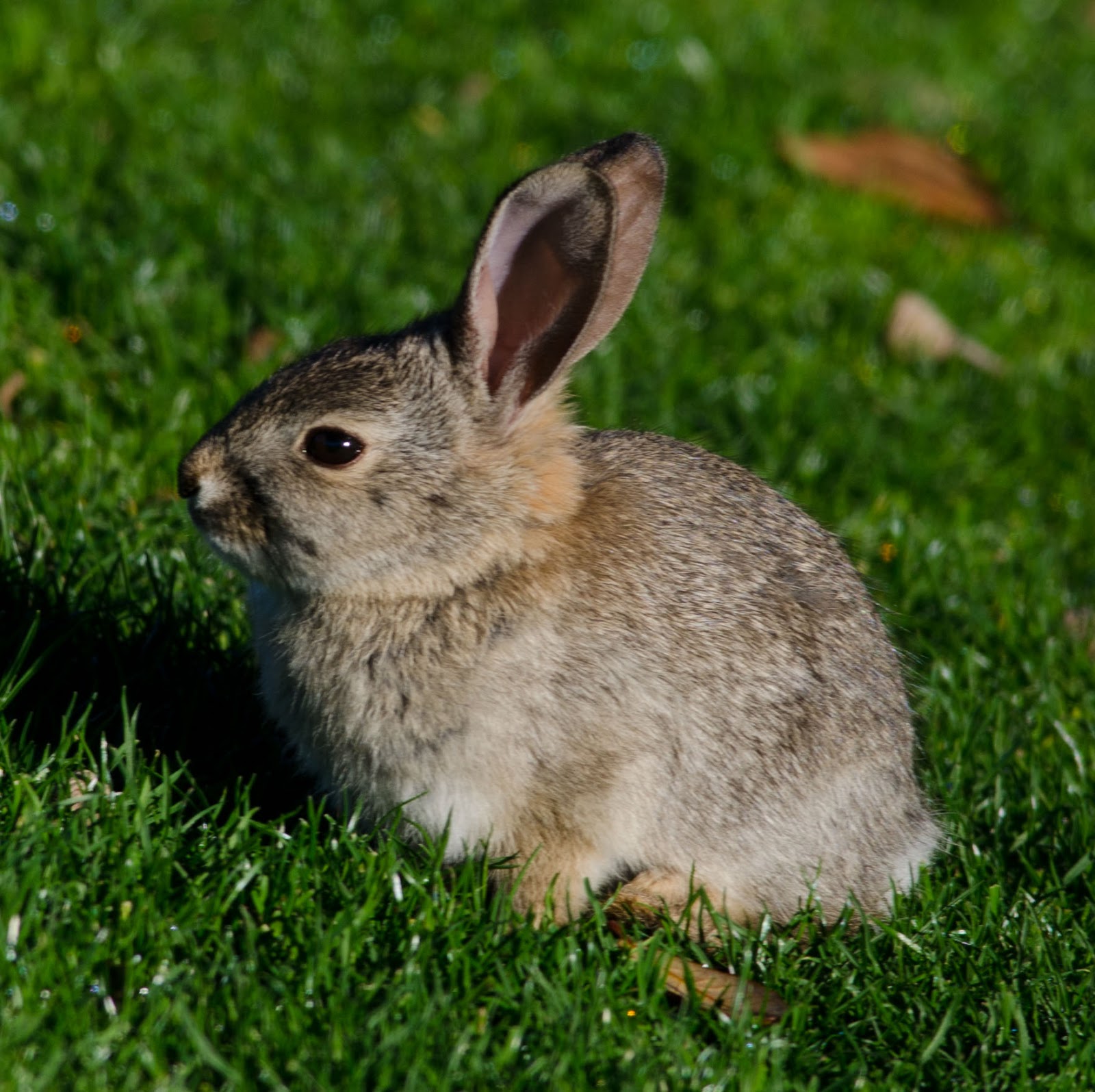
To finish off my photos I have to include a couple mammals; a baby Cottontail that was as cute as a button and a Coyote that looked a tad bit suspicious and stood perfectly still for my photo.  I think someone had it trained to not run from a camera!!!!!!!!!!!!!!!

 Cottontail


Coyote-decoy

I think the decoys are there to prevent too many geese from residing around the ponds.


Sunday, March 3, 2013

Pima Canyon Wash - 1 Mar 2013

Now that I have completed 3 days of birding, guess it is time to catch up on some blog posts.  Going to do these chronological to prevent myself from getting mixed up.  Friday after work, I headed to Pima Canyon Wash in South Mountain Park once again mostly for the exercise but also wondering what kind of avian life would present itself to me.  Now that I have an iPhone, I have downloaded a nifty little app, that has a GPS in it that records my distance, time and elevation of my walks.  And it keeps a longitude and latitude map of my complete trail.  What was interesting was the distance.  I have been guessing my distance on this hike at about 3 to 4 miles in length, but in reality it is right at 5 miles in length.  

First bird that greeted me as I got out of the car was the Arizona State Bird, a Cactus Wren.  No other wren  can be confused with this one.  It is the largest wren in the United States and has very distinct markings.  And they can be quite noisy at times with their various clucking and calls.

Cactus Wren

Soon after, as I was walking up the wash, I caught a glimpse of movement; something small in a bush very close to me.  I discovered a male Black-tailed Gnatcatcher and it was collecting nesting material.  He was not at all disturbed by my presence and continued picking shredded material off of the bush.  Most normally I hear these little birds before I see them, but in this case with a beak full of nesting material, I thinking singing was out of the question.  Love to see the black cap on these birds in their summer breeding plumage.  

 Black-tailed Gnatcatcher

Black-tailed Gnatcatcher

Further up the wash, I found a Rock Wren foraging among the rocks.  It had found a fairly large insect, but managed to hide the morsel before I could capture a photo.  

Rock Wren

And almost at my turn around point I discovered a couple of Canyon Towhees.  I had not seen this bird in this area for several weeks, so it was great to see them back and as usual, they were foraging on the ground and definitely acted a bit camera shy.  Had to shoot through the brush.

Canyon Towhee

After I had reach my turn around point and was able to briefly view a Canyon Wren, I headed back down the wash and came upon a Loggerhead Shrike that was being very cooperative with me and my camera.  It just perched out in full view with a nice blue sky background.

 Loggerhead Shrike

Loggerhead Shrike

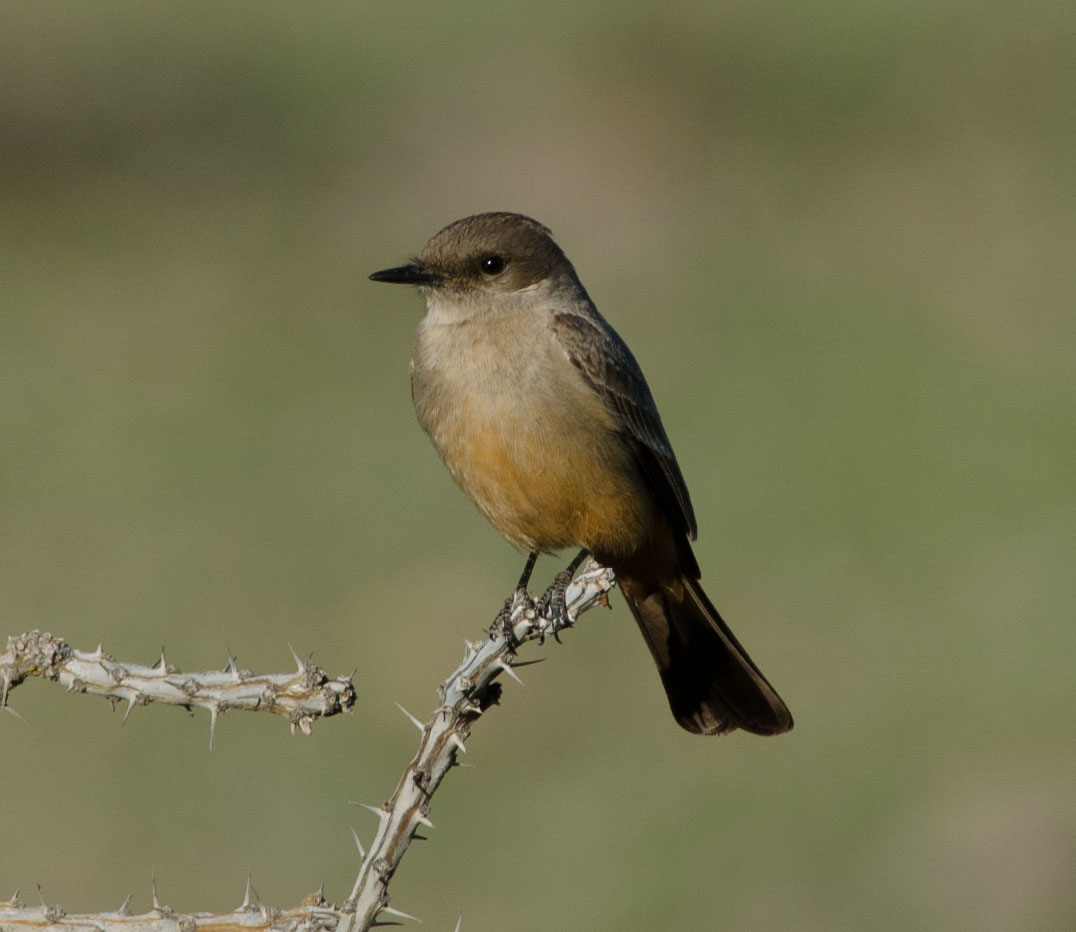
One of the last birds that I found when nearing the parking lot was a couple of Say's Phoebes.  A very common resident flycatcher in this part of Arizona.  While one of them was posing on an Ocotillo branch and I was firing away with the camera, this one must have had an itch on the back part of its neck.  Sure wish I could bend my leg back up over my back to scratch the itch!  And shortly thereafter, it took flight.

 Say's Phoebe

  Say's Phoebe

  Say's Phoebe

 Say's Phoebe

Yes, this is a lot of the same species I see quite frequently, but I never get tired of observing them.  It seems I am always learning a new behavior or trait about these frequently seen species.  The learning never ends.