Costa's Hummingbird

Costa's Hummingbird
Showing posts with label Summer Tanager. Show all posts

Monday, June 4, 2018

Springtime in Arizona

Springtime in Arizona is much different than many other parts of the United States.  With the mild winter weather, many resident birds might start breeding as early as January leading one to think that Spring has arrived.  Migrating birds are a bit different and some species can start showing up in late February and into March.  And for some species some only start arriving in June such as the Yellow-billed Cuckoo.  The months of March through May is peak springtime arrival for most migrants and birding is at its best during that time frame.  Of course, the weather is most generally pretty mild and wonderful during this time which makes birding very enjoyable.

This blog post highlights some of the birding that I enjoyed during the month of April of 2018.  Photos include a lot of our regulars interspersed with a few rarities that were encountered along the way. Towards the end of the post are some butterflies that I enjoyed and a really pretty cool reptile that not many people get to see.

Black-throated Gray Warbler


 Grace's Warbler


Turkey Vulture

 Summer Tanager - Female


Summer Tanager - Male

House Wren

Palm Warbler - A rarity for Arizona


White-faced Ibis - Breeding Plumage

 Buff-breasted Flycatcher - An Arizona specialty


 Northern Pygmy-Owl


Red-faced Warbler

 Cooper's Hawk


 Rufous-backed Robin


Streak-backed Oriole - A rarity in the US.

Band-tailed Pigeons - Not an easy bird to find in Maricopa County, Arizona.

One of my days in April was spent on a Butterfly Field Trip which resulted in 3 new species of butterfly for me.

 California Patch


 Common Streaky-Skipper - A new species for me.


 Common Streaky-Skipper


 Elada Checkerspot


Great Purple Hairstreak - Another new species for me.

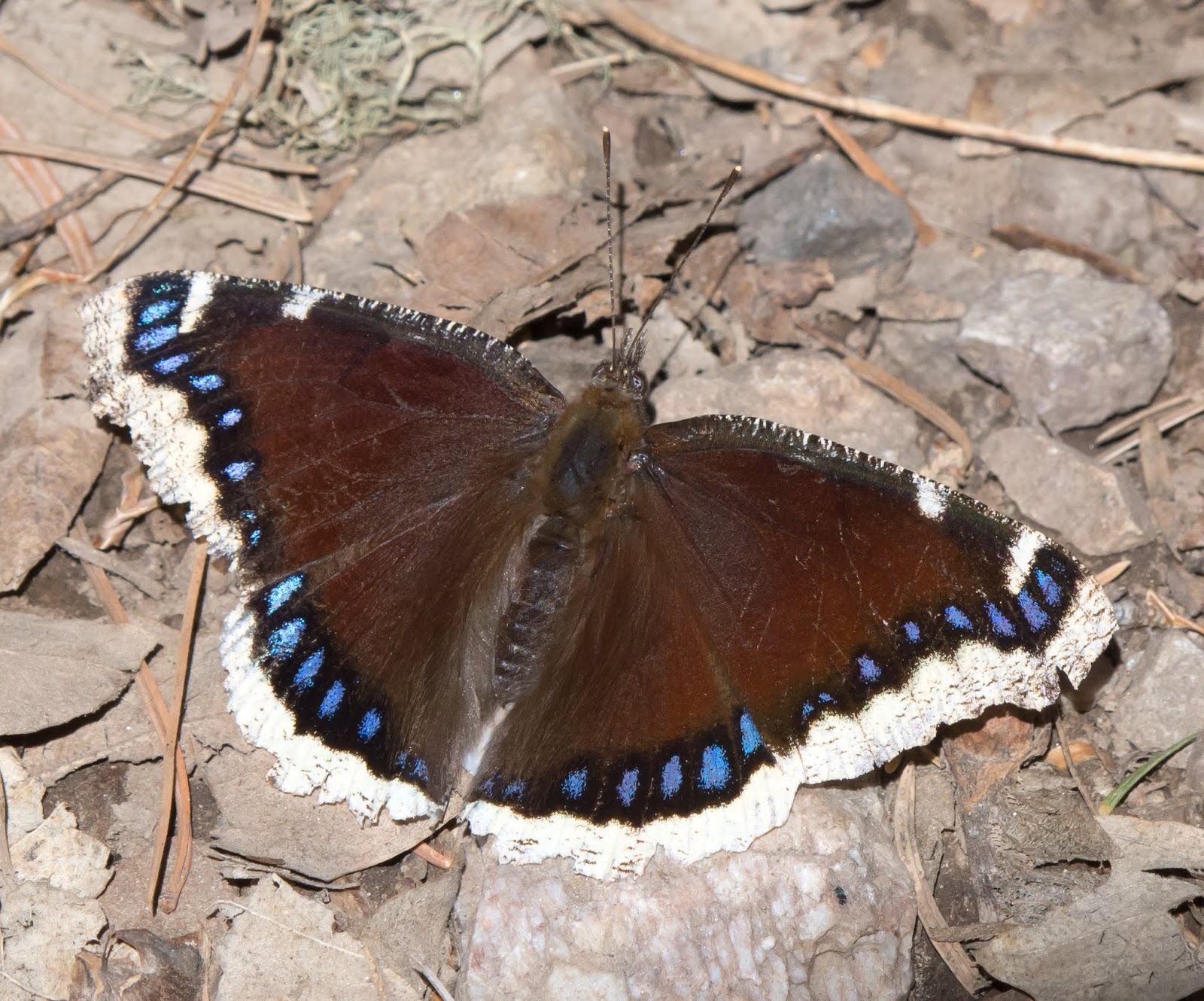
Mourning Cloak

 Desert Ironwood blossoms.  Very colorful and show why they are related to legumes. 


Filigree Skimmer

Greater Short-Horned Lizard - This one was a juvenile.

 The first of 2 Arizona Black Rattlesnakes


The second of 2 Arizona Black Rattlesnakes.


Monday, May 22, 2017

Arizona's Last Frontier - Part 2

Our second full day in Greenlee County was Saturday, May 13, and it was the Global Big Day.  We wanted to try to get as many species of birds as possible to put Greenlee County on the map for birding, so we concentrated more on the southern section of the county and some of the riparian locations to try and accumulate the highest number of species as possible.  We started out in the town of Duncan and ended the night in the Big Lue mountains north and east of Duncan.  It was a wise decision as we ended up with 107 species for the day and we covered a variety of habitats, from riparian, to desert, to a pond and ending up in the mountains.

The town of Duncan is located along the Gila River and has a wonderful riparian area and a place designated as the 'Duncan Birding Trail'.  This was our starting point on Saturday and it did not disappoint.  We ended up with a whopping 66 species in this location alone!  Finally got my best views to date of a Mississippi Kite.

 Mississippi Kite

 Mississippi Kite


  Mississippi Kite


Rose-breasted Grosbeak - Uncommon but annual in Arizona

 Summer Tanager


 Blue Grosbeak


 Cedar Waxwings with a Summer Tanager for extra measure


Barn Swallow


 Common Black Hawk


Thistle-down Velvet Ant - one of the most painful stings of the insect world

Antlion - with a quizzical look


Olive-sided Flycatcher

We finished the day at Coal Creek Campground in the Big Lue Mountains where we were able to detect a Mexican Whip-poor-will.  Obviously this is a nocturnal bird and photos were not to be had, but I was at least able to capture its call on a video and it can be heard by clicking on this LINK.

Sunday was our day to return, but we made the most of the morning before our departure by visiting a spot in the town of Clifton and Lower Eagle Creek and finally the eastern access point to Gila Box Riparian National Conservation Area.  

Anna's Hummingbird - rare in Greenlee County

 Gray Vireo - This was the first eBird report of this species in Greenlee County

For video and song of this Gray Vireo, please click on this LINK.

Now a bit of interesting information for those of you that are actually reading this post and it concerns the next 2 photos of these whiptail lizards.  These 2 species of lizards are parthenogenetic which means they are asexual and are all females.  They lay unfertilized eggs and all the offspring are actually clones of the parent.  Now isn't that an interesting tidbit of information?   Both of these species were new lifer reptiles for me as well.

Desert Grasslands Whiptail


 Sonoran Spotted Whiptail


 Sleepy Orange


Tiger Whiptail

Sonoran Gopher Snake - It was quite docile, so we enjoyed it until it finally crawled off the road and into the brush on the side.

Sonoran Gopher Snake

This trip to Greenlee County was a real eye-opener and I feel that I need to return to fully explore it some more in the future.  I do have some ideas in mind that might enable others to take a peak at what this county has to offer, but timing will be crucial to get the most species of birds.


Tuesday, June 10, 2014

Bushnell Tanks Exploration

On May 26th, I decided to visit a spot that I had only explored once before and that was about 3 years ago, Bushnell Tanks, which is located on the opposite side of Sycamore Creek from Sunflower.  I don't recall much about my first visit, so maybe it was the time of the year that I visited that did not leave me with such a wonderful experience.  But this time it was much different and now I know that I need to visit this area more often.  I spent a total of almost 3 hours exploring this spot and hiked a total of 5.6 miles in the process.  (At least that is what my GPS app recorded on my phone; see last photos in this post.)  

The Brown-crested Flycatchers have returned for the summer.  This is a species that many new birders confuse with the more common Ash-throated Flycatcher.  They are very similar in appearance and have some minor visual differences, but those can sometimes be hard to tell when in the field.  Another aspect is to note the time of the year the bird is seen.  Brown-crested are migrants that return every year late April and into May and are usually gone by the end of September.  Ash-throated can be found throughout the year in Maricopa County.  But the best way to identify the differences is by learning their songs and calls.  And at this location in the spring and summer, both species occur making it so easy to listen to the different calls and songs.  And this trip presented this once again to me. 

Brown-crested Flycatcher

Ash-throated Flycatcher

The flycatchers were well represented as I also found both Western Kingbirds and Cassin's Kingbirds.  These 2 species can also confuse many new birders, but once again, the songs will set them apart and in the case of the 2 kingbirds, there are enough visual things to look for to tell the difference, such as the white outer tail feathers of the Western Kingbird.  No other kingbird has outer white tail feathers.

Cassin's Kingbird

Western Kingbird

During the entire time on this excursion, I was constantly under the watchful eyes of a pair of Zone-tailed Hawks.  If they had a nest in the area, it was out of my views and mostly likely very well concealed in one of the many sycamore trees.

Zone-tailed hawk

Zone-tailed hawk

A pair of Warbling Vireos were apparently having a warbling match to see which one could sing the loudest; but do not think a winner was declared this time around.

Warbling Vireos

One of the the day's most colorful birds happened to be the Summer Tanager.  This is a bird that I always love to see each and every spring.  The male and its bright red mantle of feathers is such an eye-opener, but the female is no slouch either in its covering of golden-yellow feathers.  At least this time she showed off a bit better than the male by perching in the sunlight.

Summer Tanager - Male

Summer Tanager - Female

Lucy's Warblers were probably one of the most numerous species of birds in this location as they were singing everywhere.  Oftentimes this bird just appears as a dull gray bird, but they do possess a couple of patches of a brick-red coloration; one on their rump and one on the top of head.  Many times those markings are not well seen.

Lucy's Warbler

Lucy's Warbler

The bird the won the award for the least well groomed was a very vocal and loudly singing Blue Grosbeak.  He was definitely trying to call in a female, but not sure what his luck was going to be this year as he had a lot of new blue feathers still missing for the breeding season.  I do not believe I have ever seen one of these beautiful birds in such a dull coat of feathers.  But maybe by now, it has shed all those dull feathers and it sporting a nice bright blue covering of feathers.

Blue Grosbeak - molting

Blue Grosbeak - molting

Other photos of note include a honeybee on a nice white thistle flower, an Ornate Tree Lizard on a rusty pipe. a Tiger Whiptail Lizard, and a beautiful purple flower that I believe is a species of spiderwort.

Honeybee

Ornate Tree Lizard

Tiger Whiptail


After spending 3 hours with all of this beauty and wonder, you know I will be returning to this place in the future.  After all, it is a great place to get in a good hike and some great solitude with some incredible wonders of nature.  And just to show the distance, here is the final reading on my GPS app showing distance, time and elevation irregularities.  

My hiking route - distance and path I took

Hiking route with time and elevation measurements

This is definitely one of those places that needs to be explored a bit more in the future.