OK, that heading is quite an exaggeration from reality. With a heading like that, one would think I was birding the Great Divide in the Rocky Mountains. Truth be told, the divide I am referring to is far less important and generally not even considered a 'divide'. This divide, is the division line of Maricopa and Gila Counties on Mt Ord and the Slate Creek Divide in the far northeastern reaches of Maricopa County. Probably not considered very important unless one is a birder and especially an eBirder where entering reports with accuracy really do count. I volunteered to cover the Gila County portion of these 2 locations for the NAMBC (North American Migratory Bird Count) and I was fortunate to have Jason Morgan offer to assist me this year. Since I love the Mt Ord area so much, all we had to do was concentrate on the Gila County portion only this time. The county line between these 2 counties comes close to following the forest roads that lead to the tops of both locations with Gila County predominately to the north and east of the county roads. However there are some spots where the county line crosses over the road and then back again and knowing where those spots were located was key to our success.
We arrived at Mt Ord at 5:40 am and our starting temperature was a nice and balmy 36° F! And to top it off, we had a bit of snow on the ground in sheltered areas as it had snowed the day and night before our arrival. So we got off to a very chilly start, but that did not seem to bother most of the birds.

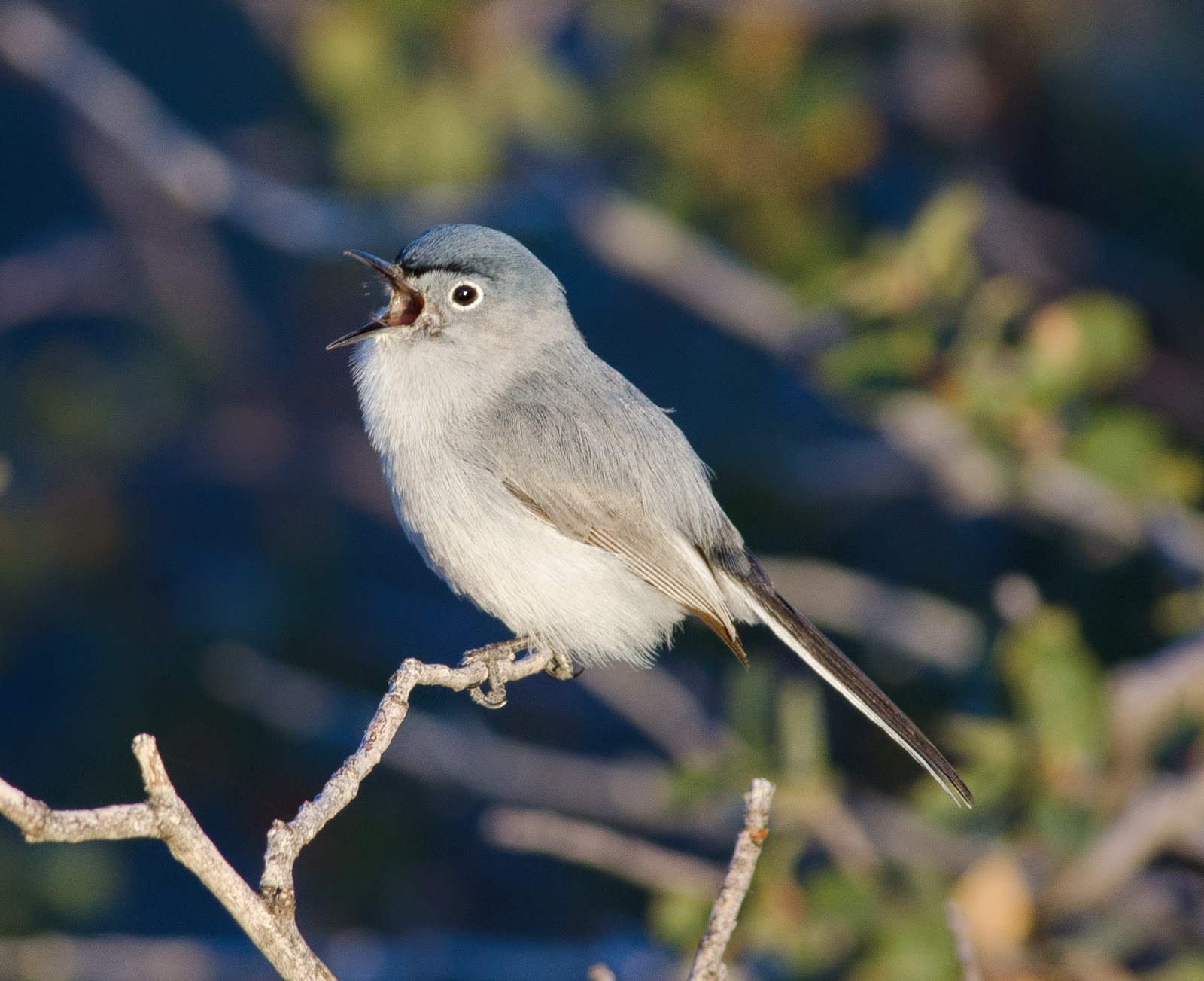
By far, our most numerous bird was the Blue-gray Gnatcatcher which were found predominately in the higher elevations and were heard and seen at every stop we made.

Blue-gray Gnatcatcher


Another very common bird in this location and the most numerous of all the warblers we found was the Black-throated Gray Warbler. I have not yet found any warbler species that was easy to photograph, so one has to have a bit of patience and once in a while they at least will show themselves on a perch in an a bit more visible place. That does not mean the lighting will be great for photos when they do this, but one has to take what is presented at times.

Black-throated Gray Warbler


Black-throated Gray Warbler and its departure
Finally was able to get a good visual on a Hutton's Vireo on this trip. A few weeks ago when I visited this area with a couple of out-of-state birders, all I got of these birds were them singing. They did not want to show themselves at all.

Hutton's Vireo
Next photo is one of 2 empidonax flycatchers that I could not safely identify. This is a very tough family of birds to ID with 100% certainty. Vocal calls notes are very helpful, but most of them that I encounter are silent so I have to rely on behavior and other small details. Unfortunately, this is the only photo that I captured of this one, but based on the long primary projection, my best guess on this one is a Hammond's Flycatcher.

Empidonax flycatcher species
Of course we had many Black-chinned Sparrows as well, with most of them being in the lower elevations. Kind of surprised to have some a little higher up than I have seen them before and actually using a pine tree for its singing.

Black-chinned Sparrow


Other warblers that we had on Mt Ord included Hermit Warbler and Grace's Warbler and both are always a delight to see. Hermit is a passing migrant while Grace's breeding range includes many of the high elevation locations in Arizona including Mt Ord.

Grace's Warbler

Hermit Warbler
Rounding out some of the many birds we found on Mt Ord, were Chipping Sparrows, a pair of Lazuli Buntings, and a first year male Scott's Oriole.

Chipping Sparrow

Lazuli Bunting-female on left and male on the right

Scott's Oriole
After spending most of the morning on Mt Ord, we then travelled to the west side of Hwy 87 and worked our way up to the Slate Creek Divide area. Just before we decided to stop for a lunch break on one of the ridges on the road up, we happened to find an Olive-sided Flycatcher. As we got out to observe it in more detail another vehicle full of barking dogs came up from behind us and needless to say, once they had passed, the bird had disappeared.

Olive -sided Flycatcher
Acorn Woodpeckers were plentiful, but most were not approachable for photos. This is also the only place in Maricopa County where one can find Mexican Jays. Today they were located on the Gila County side of the road, so we were able to add them to our list for the NAMBC.

Acorn Woodpecker

Mexican Jay
We also had several Broad-tailed Hummingbirds fly by and males can be identified in flight with the loud whistling produced by their wings in flight. We did have a female take time to pose for us and I found after the fact she was photo bombed by a colorful blue and black tent caterpillar on the right in the background.

Broad-tailed Hummingbird - female
Slate Creek Divide was much slower in the bird department, but part of that might have been the fact that we were birding there in the usually slowest part of the day for birding. A very nice and cooperative Hammond's Flycatcher displayed and performed for me before we called it a day.

Hammond's Flycatcher


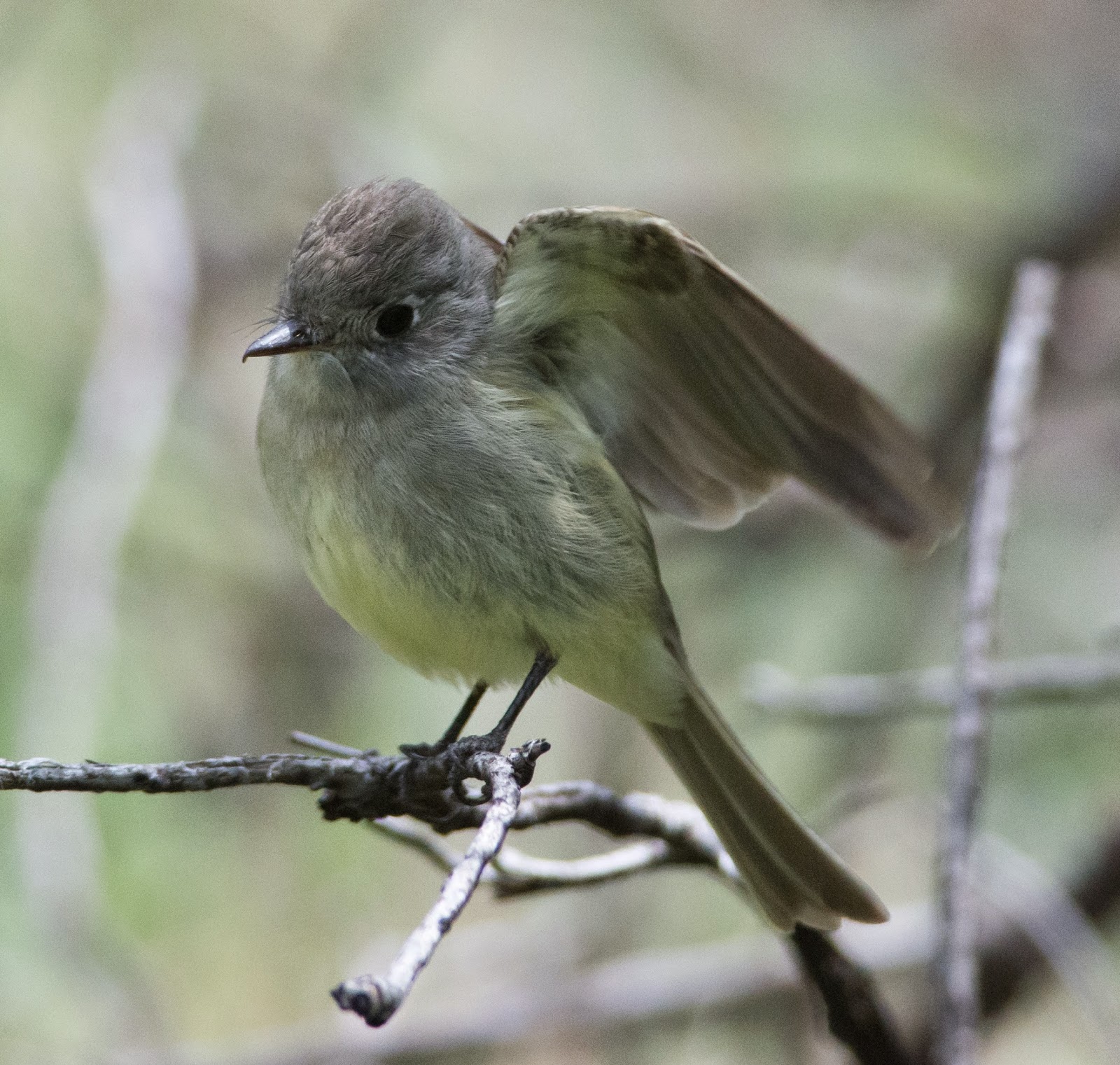
We concluded the day about mid afternoon, but we got to see some incredible scenery along with some really cool birds and hopefully contributed a small bit to the NAMBC for 2015.