Costa's Hummingbird

Costa's Hummingbird
Showing posts with label Arizona Woodpecker. Show all posts

Saturday, February 3, 2018

Continuing Education: Grasslands and Riparian

It did not take long for me to head back south to the grasslands of southeastern Arizona after my first trip with Barb and Jeanne.  Four days later, I was heading back again and this time I asked Kyle Waites if he would be interested in checking out some of these grasslands.  He readily accepted and off we went.  This time we headed straight to the grasslands and the longspur pond just east of the town of Sonoita, Arizona.  We arrived early, around sunrise, and it was overcast, cloudy and windy.  But we had prepared for that and we bundled up, got out our scopes and started scanning.  We actually arrived a bit too early as the only activity we had in the beginning was a few Horned Larks and Savannah Sparrows. It did not take long to hear the first of the longspurs flying in.  Once again, this was educational for me to experience their flight calls as they arrived and to also observe the flight patterns and compare those flight patterns to the Horned Lark flocks.  One can read about these details in books and hear it from other birders, but to actually experience it, it then gives a new meaning to continuing education. Hopefully, I will remember these points for the future.

On this visit I managed to capture a photo of the single Lapland Longspur that had eluded me on the first visit. Sad fact to this photo was that after finding the bird in my scope, and then trying to find it in my binoculars, when I raised my camera, I had no idea what I was seeing.  I just saw something moving in all the piles of cattle manure, I just started taking photos.  Surprised to get home and find I had the right bird.  We did manage to find and see all 3 species of longspurs;  Chestnut-collared, McCown's, and Lapland .

Lapland Longspur

Grsshopper Sparrow - Nice have this one pay a visit as well.

Pronghorn - I always love seeing these mammals.

From here we headed to the quaint and fun town of Patagonia to stop in for a visit to Paton's Hummingbird Haven which is now managed by the Tucson Audubon Society.  This place is well known to most birders in the United States as the best place to find the Violet-crowned Hummingbird.  And once again it lived up to its expectations as one came in to visit one of the feeders.  

 Violet-crowned Hummingbird


Keeping an eye to the sky!

Finding Cassin's Finches at this location was a bit unexpected and was a welcome bird to add to my Santa Cruz County list.  

 Cassin's Finch - Female


 Cassin's Finch - Male


 Lincoln's Sparrow

And of course Pyrrhuloxia is never a bad bird to see.

 Pyrrhuloxia - Male

Pyrrhuloxia - Female

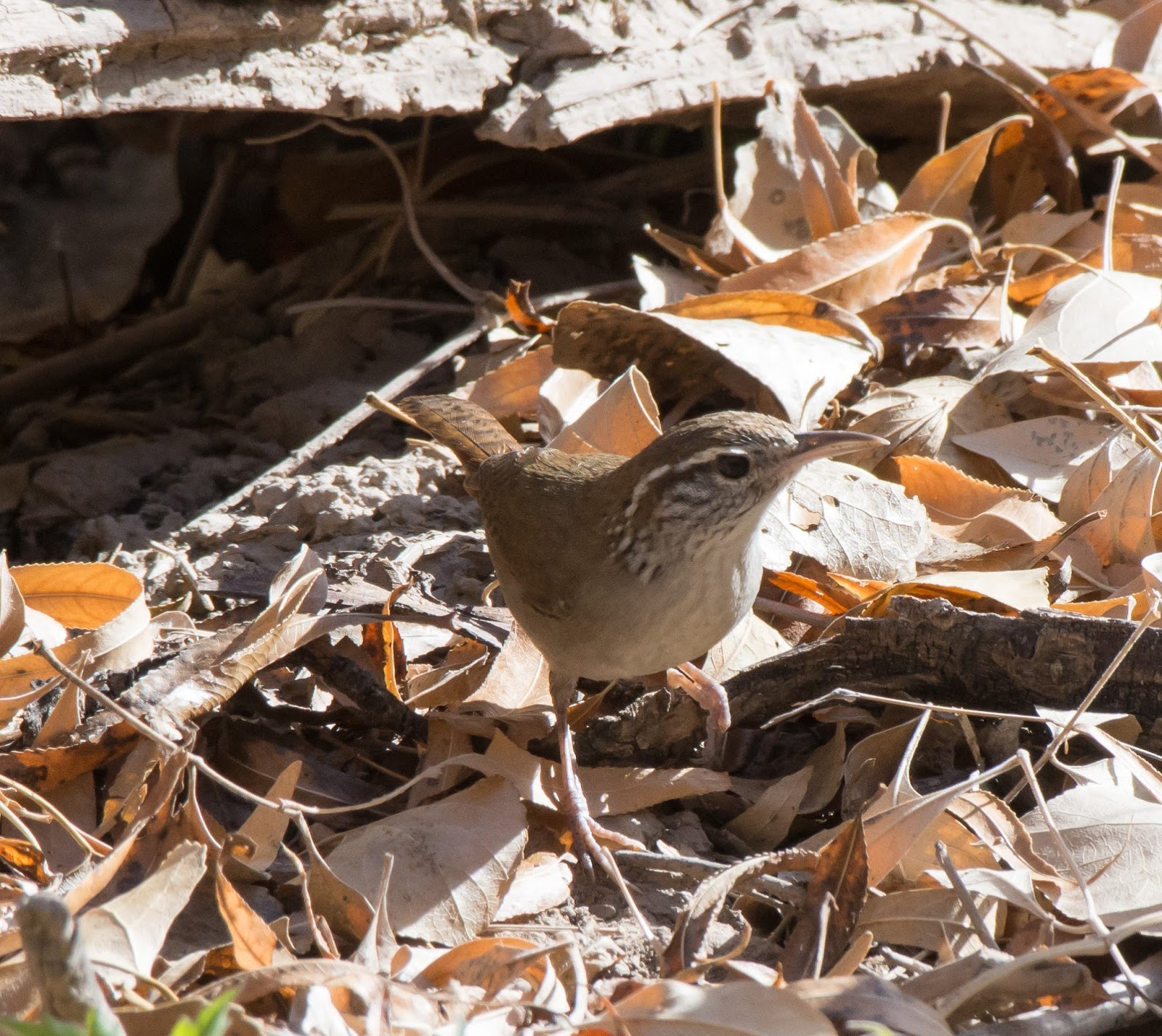
Since we were already that far south and needed to plan a route home, I suggested stopping at Santa Gertrudis Lane on the west side of the Santa Rita Mountains.  There had been reports of a Sinaloa Wren in the recent past, but it had proven to be a bit difficult to find and did not always cooperate with many birders.  Guess this day, it decided to cooperate with a few of us birders that were there. This is Mexican species that seems to be a bit more regular in the past few years in Arizona.  It has not been reported in any other state in the United States. 

Sinaloa Wren


Our final stop was at the Santa Rita Lodge in Madera Canyon, which is one of my favorite spots in the entire state of Arizona.  They have created a great setup for birders to watch and enjoy the birds.  And they have made it very friendly for the birds themselves.  

 Arizona Woodpecker


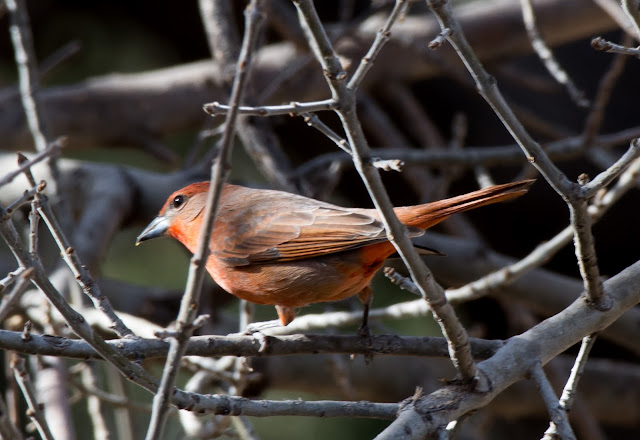
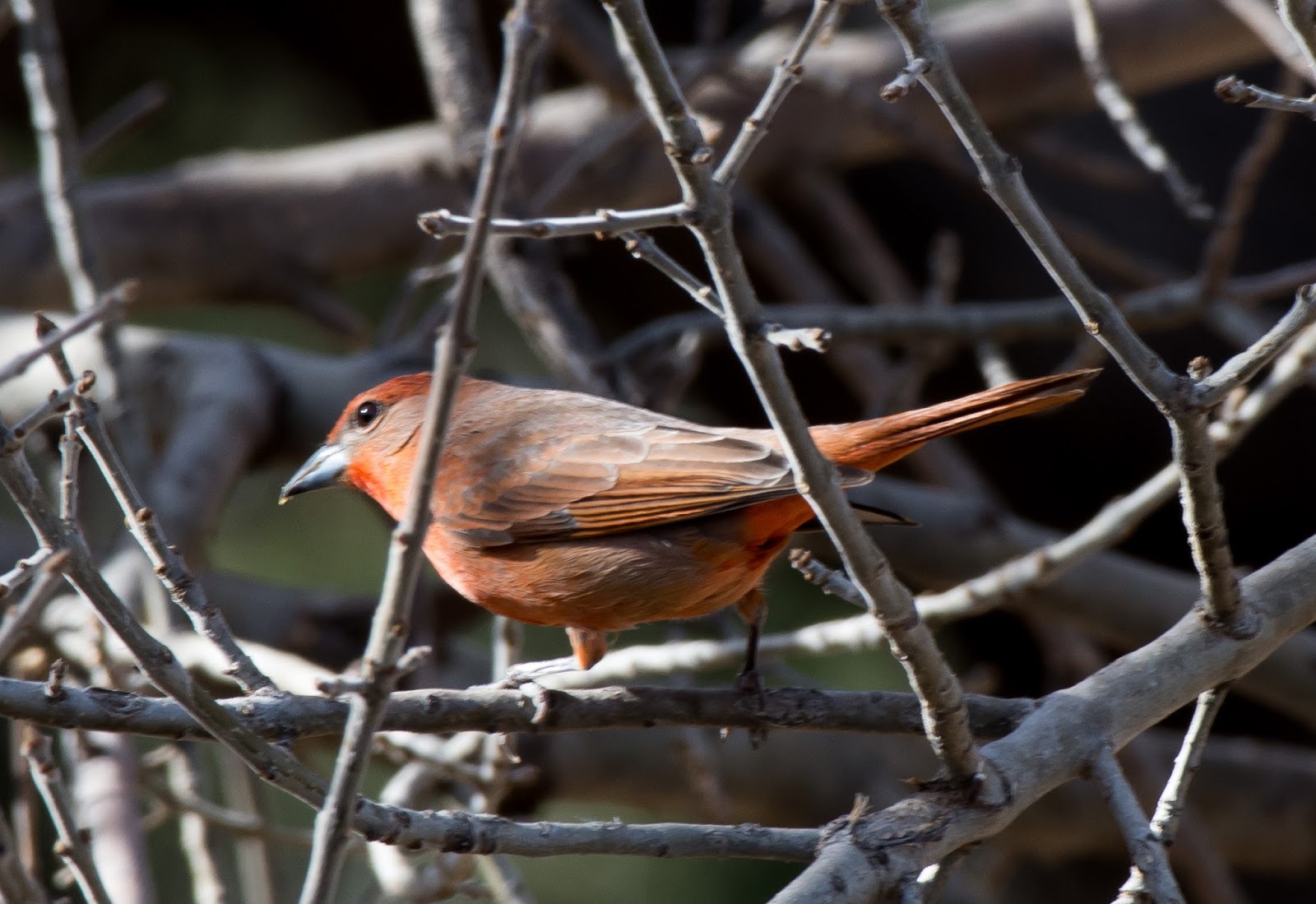
 Hepatic Tanager - Male


 Rivoli's Hummingbird


 Rufous-winged Sparrow


Wild Turkey - Male

We had an amazing day of birding and was able to see many of the southeastern Arizona specialties along with a lot of the really great regulars as well.  I believe Kyle ended up with 8 new life birds and he now knows where to find some great birds in some amazing spots in that part of the state. I am sure he will venture to the southeastern part of the state a bit more in the future.  It is amazing in the diversity of birds only a couple hours away from the Phoenix metro area.  We have our specialties as well, so many from the southeast also make the trek northward to see some of our great birds.    


Wednesday, February 24, 2016

Specialty Birding: Arizona Style - Part 2

Friday we were up early and had plans to search for another specialty bird, the Sinaloa Wren and Chris was joining us for the entire day on this trip.  This is a bird that Chris and I had seen at Rancho El Aribabi in Mexico, twice, but photos were difficult as this bird is very secretive.  We also made a trip to Huachuca Canyon over a year ago to try for it without much luck.  Chris had gotten a glimpse of it and I had heard its ratcheting call on that trip.  Very disappointing to say the least.  Jennifer and Peggy had never seen this bird, so it would be a life bird for both of them.

Huachuca Canyon is accessed only through a military base, Fort Huachuca and they are very cognizant of how much birders love to visit this canyon.  They are very agreeable to allow birders to go exploring, and they have now installed a check-in system and with a proper photo ID, one will get placed in their data base and will be issued a 30 day pass to access Huachuca Canyon.  After the initial check-in, it is easier to get a new pass on future visits.  This was a process that took us about 20 minutes to complete, and was fairly easy, so it is nothing to keep one from going in.  We went immediately to the location where this bird has been seen for almost 2 years.  I am sure it is getting lonely and wondering why a female has not found it and its location for a nest.  We knew it frequented the stream bed and loved the dense brush piles along the flowing water, but it is very secretive and not often seen.  We split up and watched and waited for a while with no results.  One other person was there when we arrived and he claimed to have heard it and saw it about 20 minutes before we arrived.  Chris and I wandered down stream a bit further and found a spot that looked good for it and we stood there for about 15 minutes, when suddenly, we saw a movement in the brush pile of a bird that darted out in the shade and then back in for a split second.  Adrenalin just kicked up a notch for both of us!  We wanted to make sure it was the Sinaloa Wren and not a Bewick's Wren, and a couple of minutes later it popped out into the opening once more.  A quick photo and confirmation got me quickly running back to get the girls to join us.  


What happened next was utterly astounding, this shy little bird, started to put on a show for us.  At first, it started coming out but staying undercover in the brush and grasses occasionally popping its head out for us.


Eventually, it came out and perched on a small twig and sat there in the light and just took its time and looked both, right and left, multiple times while our cameras clicked away.  By this time the other person that was there earlier had found his way down to where we were and he also got to see it well.  Another young couple had showed up and they too, knew that we were on it and they came in behind us to get in on the show. At one point, it almost looked like it was resting and relaxing; may have been the clicking of the cameras.  Good example of where persistence pays off.  I finally got some great photos of a rare US bird as did Chris, and Jen and Peggy got a new life bird, which is hard for them as their lists are very high already.  So glad to be a part of the special occasion! 


After this success, and since we were on Cloud 9, we decided to head to the Patagonia area to see what we could find.  The stop at the Paton House was quite good, but we really missed our good friend, Larry Morgan, who has been the host for this place for the last couple of years.  He was Mr Congeniality for that place and everyone that visited, left with a great experience. In the process, I captured some photos of a Bewick's Wren, a Green-tailed Towhee, and an Inca Dove. 

Bewick's Wren


Green-tailed Towhee

Inca Dove

And a quick short stop in downtown Patagonia, resulted in an Anna's Hummingbird, which was already nesting.  Note the nest well disguised on the top of a pine cone in the first photo and the female Anna's Hummingbird on it in the second photo.

Anna's Humingbird nest on the top of a pine cone.

Anna's Hummingbird

Since our day was getting shorter and we wanted to get to Madera Canyon with some daylight left, we headed in that direction so we could arrive in time to get some birds before calling it a day.  Santa Rita Lodge has an awesome set up for birders.  Very relaxing where one can enjoy the many birds that come to visit the feeders.  We had a total of 4 species of hummingbirds at Santa Rita Lodge.  In addition to Anna's and Broad-billed Hummingbirds, we also had the first of the season, Rufous and a Magnificent Hummingbird.  

 Magnificent Hummingbird

Rufous Hummingbird

A couple of the stars of the show were a male and a female Arizona Woodpecker along with the regular Mexican Jays and the always classy looking Yellow-eyed Junco.

 Arizona Woodpecker - Male

 Arizona Woodpecker - Female

 Mexican Jay

Yellow-eyed Junco

We also got a 'lifer' butterfly on this day, an Arizona Powdered Skipper.


Before we knew it, it was time to head back to the Phoenix area and we had to bid adieu to Chris.  It was a remarkable day with some really great birds and the icing on the cake was the Sinaloa Wren.   


Wednesday, July 16, 2014

A One Day Escape to Madera

Most generally when I think of the term 'cabin fever', I tend to think of long months of cold winter weather keeping a person confined indoors for an extended period of time.  That thinking is probably due to the fact that I can recall many cold winters in Nebraska in the past.  However, this same term can be applied to Arizona's summers; the heat can make it miserable to be outdoors in the desert.  But the summer cabin fever in Arizona does have a fairly easy cure; head to higher elevations.  So this past Saturday, I joined forces with fellow birders, Tommy DeBardeleben, Mark Ochs, and Chris Rohrer.  Tommy and I left the Phoenix area about 4:00 am and picked up Mark at Picacho Peak and then the 3 of us picked up Chris in Tucson and we headed to Madera Canyon for the day.  We had a couple of target birds that we wanted to try and locate and get photos.  We dipped on the Whiskered Screech Owl, which is a bird that I have heard before, but never seen.  We visited the Whiskered Screech Owl's nest cavity several times but never got a glimpse of them or their fledglings which were seen and photographed the day before.

The second target bird was the Plain-capped Starthroat which is native to Mexico, but every year it seems that a couple of them show up in Arizona and this year was no exception.  In fact this year seems to be a banner year as a few more than normal have been discovered.  This is a bird that I have only seen once before about 2 years ago, so seeing it again was really quite wonderful.  This is one of the larger hummingbird species and once it makes its appearance, there is no confusion of what it is compared the rest of the hummers flitting about.  It is about an inch longer than the rest at the feeders this day and its long straight bill is quite remarkable.  (While I really prefer to capture photos of birds away from feeders, sometimes one has to endure and take what one can get!)

 Plain-capped Starthroat


 Plain-capped Starthroat


Plain-capped Starthroat (with a Black-chinned Hummingbird on the left)

Late in the afternoon the feeders at Santa Rita Lodge received a visit by a male Rufous Hummingbird, that added a dynamic to the Black-chinned and Broad-billed Hummingbirds that were by far the most common species to be found at the feeders that day.

Rufous Hummingbird - on the left

We also had a couple of species of woodpeckers that returned frequently for our enjoyment.  The Acorn Woodpeckers were heard and seen quite frequently, but the most intriguing one for me was the Arizona Woodpecker.  This is another bird that I had seen on various occasions and at various locations, but have never really been able to obtain any decent photos of this species.  Well, my luck was a bit better on this day with several visits by a couple of these birds.  In the United States the range of this woodpecker is pretty much restricted to extreme southeastern Arizona and just a little bit into the southwest corner of New Mexico.  

 Acorn Woodpecker


Arizona Woodpecker

Some of the other birds that visited Santa Rita Lodge during our visit were the resident flock of Wild Turkey, Blue and Black-headed Grosbeaks, Bridled Titmouse, Mexican Jay, Hepatic Tanager, and a Sulphur-bellied Flycatcher playing with it's food, which provided a nice array of color and interest to our birds for the day at Santa Rita Lodge.

 Wild Turkey


 Black-headed Grosbeak - Male


Blue Grosbeak - Male

 Bridled Titmouse


 Hepatic Tanager


Mexican Jay

 Sulphur-bellied Flycatcher playing with prey


Sulphur-bellied Flycatcher - with prey

Late morning we decided to make a short trip down to Florida Canyon to see if we could locate the Rufous-capped Warblers, another bird that is hard to find in the United States.  While we struck out on the warblers, our consolation prize turned out to be 3 Black-capped Gnatcatchers, another Mexican species that can only be found in the United States in Arizona.  I have seen one of these birds once (or maybe twice) before, but this time I got photos that leave a lot to be desired, but that is all the more reason to search for them again and maybe find a male in breeding plumage in the future.  A couple of the keys in identification of this species is the long bill and the white underside of the tail. 

 Black-capped Gnatcatcher


Black-capped Gnatcatcher

A couple of other fine birds to find in this location were the Indigo and the Varied Bunting.  Both were a bit far off and did not allow for the best of photos, but it is hard not to attempt to snap a couple of photos anyway.

Indigo Bunting

Varied Bunting

The day was not yet over as we had seen on the list that a juvenile Tricolored Heron had been found the day before in Tucson, so when we returned to Tucson, we stopped to try and locate it.  And at that time of the day, it was resting and was pretty well hidden in a tree, but this is another fairly rare bird in Arizona.  I had seen several on my trip to Texas in April, but this was a first for me to see in Arizona.  

Tricolored heron

In the same vicinity, we found a pair of Cooper's Hawks and they must be fairly used to people as they did not seem to be as wary as most that I encounter.

 Cooper's Hawk

Madera Canyon is always a great place to visit as there seems to be no end to the wonderful birds and other critters that can be found in this area.